Ethical Shamanism

Ethical Shamanic Practice: The Three Core Principles of Working with the Spirit World

Ethical Shamanic Practice: The Three Core Principles of Working with the Spirit World

Ethical Shamanic practice is built on relationship — not technique. And like any healthy relationship, it requires certain qualities to thrive. Over years of practice and teaching, I've distilled these qualities into three core principles I call the Three C's: Context, Consent, and Collaboration. These aren't rules imposed from outside. They are the natural expression of genuine, respectful relationship with the living world — with the land, the spirit realm, and all the beings we work alongside in Shamanic practice.

My Introduction to Context, Consent and Collaboration in Shamanic Practice

When I was in second grade, my school went on a trip to the high desert in central Oregon. At that point in my life, visiting a different bioregion was a huge revelation to me. I was accustomed to the towering firs, waterfalls and cascading moss of the pacific northwest rainforest. Encountering such a distinct environment with a completely different architecture of climate, geology, and inhabitants opened my eyes to new awe for the genius of nature. As we learned about life in the desert, I felt the tremendous importance of understanding the constellation of beings, elements and land, and how they all work together in a way that is specific and ideal to that particular place.

That moment planted the seeds of what would later become the three principles I now teach as the foundation of all Shamanic practice: Context, Consent and Collaboration. For the first time, I clearly realized the significance of this dynamic in nature. Later in my teenage years, these ideas took on more structure and definition as I began my Shamanic study and learned practices from my teachers about how to make offerings and communicate with land and nature spirits, and bring these principles into Shamanic healing sessions.

Let’s explore the Three C’s of Shamanic practice and how they can help you deepen your relationship with nature and the spirit realm.

Context: Know Where You Are

Context is the first and most foundational C. In Shamanic practice, context means understanding the existing architecture of wherever you are. What land are you on? Who are the indigenous peoples or original stewards of this place? What are the common plants, animals, and salient geological features? What is the history of this land — its transformation, its grief, its gifts? Who are the spirit guides who work with these frequencies and come from this place?

Context also encompasses the cultural lineage you are working within. Are you drawing on a specific tradition? A specific teacher? A specific geography? The more clearly you understand your context — both the land context and the lineage context — the more effectively and respectfully you can work.

Practically, this means: wherever you are, take time to learn about the place. Research the bioregion. Learn the plants and animals, and their relationships with each other. Research the history. Acknowledge the peoples who have stewarded this land before you. This is not only ethically important — it also makes your practice more powerful, because you are working in alignment with the actual living intelligence and existing architecture of the place rather than imposing something onto it. This is foundational to a practice of ethical Shamanism — there is no true relationship without understanding.

Consent: Ask Before You Act

Ethical Shamanism Michelle Hawk Portland Oregon

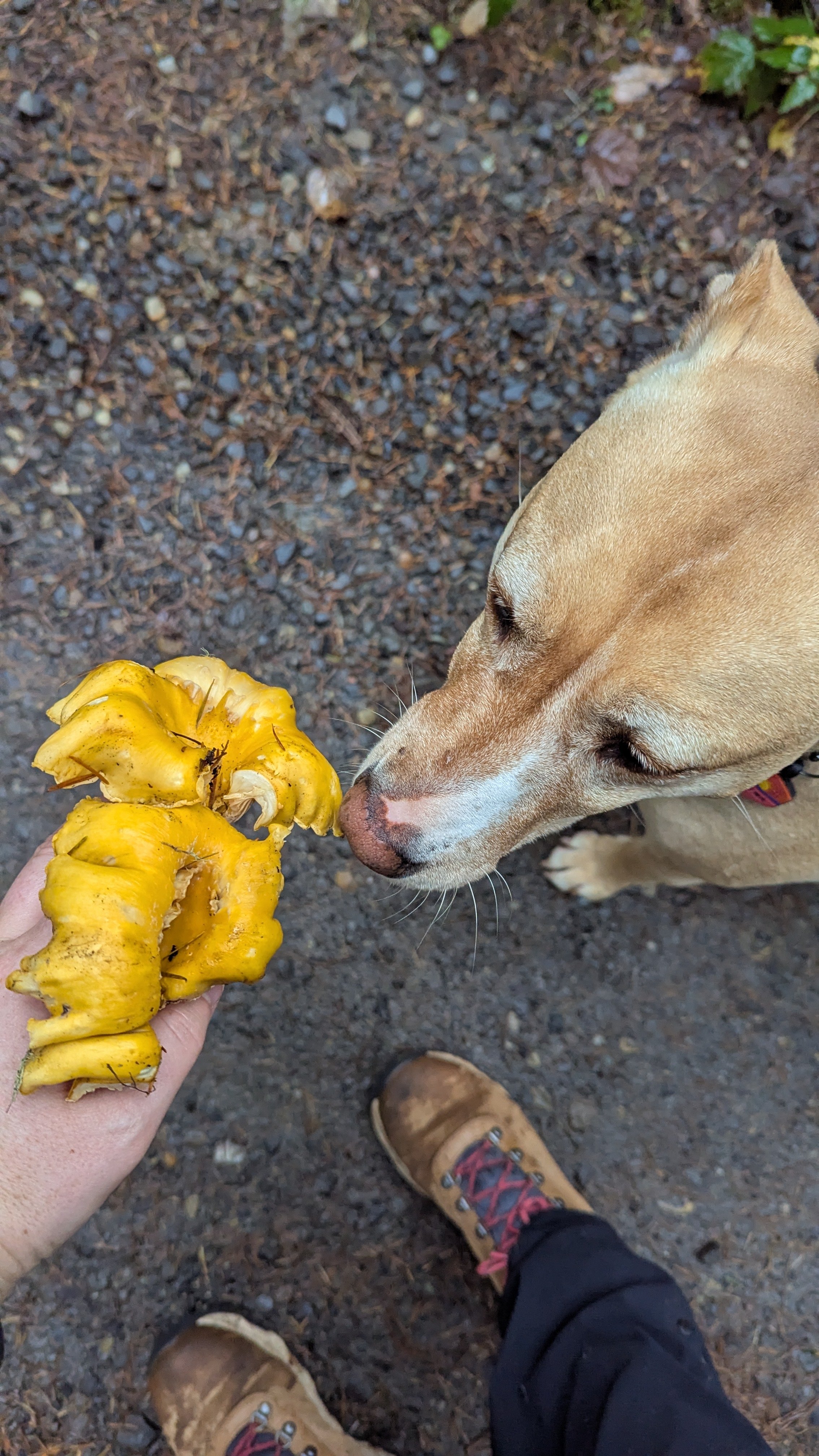
Asking for and receiving consent to harvest Chanterelle mushrooms.

Earth is a free will planet. This is one of the fundamental principles of Shamanic cosmology. Nothing can be compelled. Nothing should be compelled. Everything we do in relationship with the spirit world, with land and nature spirits, with the beings we work alongside — all of it happens in the context of consent. In an animistic worldview, consent isn’t just a courtesy — it's a recognition that everything around us is genuinely alive and sovereign.

This means asking before you take anything from nature — a mushroom, a branch, a stone, a handful of herbs. It means asking the land or the space before you do ceremony, Shamanic healing work, or any kind of energetic practice. It means listening for the response, which may come as a felt sense of openness or resistance, as a sound, as an image, as a physical sensation or physical messenger. The principle of asking and attuning before acting is at the heart of what I mean by ethical Shamanism.

What does it feel like when consent isn’t present? I clearly remember an experience several years ago where I was walking through the forest, looking for a space to do some Qigong and Shamanic ritual practice. I came across a spot that visually looked beautiful and appealing. When I opened my senses to ask if I was welcome to practice there, I felt incredibly uneasy. All of a sudden, the birds all went quiet, and I felt prickling on the back of my neck. I acknowledged the refusal and kept walking. As soon as I left the space, the birds resumed singing and the sensation faded. I kept walking until I came across another space that answered my request with warmth, welcome and a feather on the ground.

Collaboration: You Are Never Alone

The third C is perhaps the most liberating: you are never doing this alone. Shamanic practice is always collaborative. You are working alongside your spirit guides, your lineage teachers, the land spirits of wherever you are, the medicine spirits of the plants and elements, your own higher self. All of these are available to you as partners, allies and collaborators.

The shift from ‘I am doing this’ to ‘we are doing this together’ is transformative. When you’re holding space for someone in a Shamanic healing session or ritual, you don’t need to carry it all yourself. When you’re navigating something difficult in your own life, you don’t need to navigate it alone. When you’re facilitating a group or a retreat, you can invite the land itself to hold the container with you.

Collaboration requires the skill of asking, the willingness to receive and the reciprocal flow of energy through offering back. All of these are practices, and like all practices, they deepen with time, attention and devotion.

Putting the Three C’s Into Practice

As you are building your own Shamanic practice, here is a simple way to bring all three C’s into any Shamanic work or ceremony.

  1. Before you begin, take a moment to orient to Context: where am I? What is the living architecture of this place? What do I need to understand about these beings and this environment?

  2. Then move to Consent: I am asking permission to be here in this way. I am listening for the response and waiting for a full yes.

  3. Finally, open to Collaboration: I am not doing this alone. I am working with my guides, with the land spirits, with all the beings who choose to support this work for the highest and greatest good. May my practice be a devotional gift of reciprocal generosity.

This three-part orientation takes only a few minutes and it fundamentally changes the quality of everything you do. It moves you from performing a technique to being in genuine relationship. That difference is everything.

Ready to Deepen Your Shamanic Practice?

The Three C's — Context, Consent and Collaboration — are woven through everything I teach, from individual healing sessions to long-term mentorship to the Foundations of Shamanism course. They're not just principles to read about. They're skills that develop through practice, guidance and genuine relationship with the living world.

If you're ready to build an ethical Shamanic practice rooted in integrity, here's where to go next:

Foundations of Shamanism — my 11-week live online course covering the essential skills of ethical, grounded Shamanic practice.

Shamanic Mentorship — 1:1 support for your unique path of healing and awakening.

Shamanic Healing — powerful sessions for deep personal healing work.

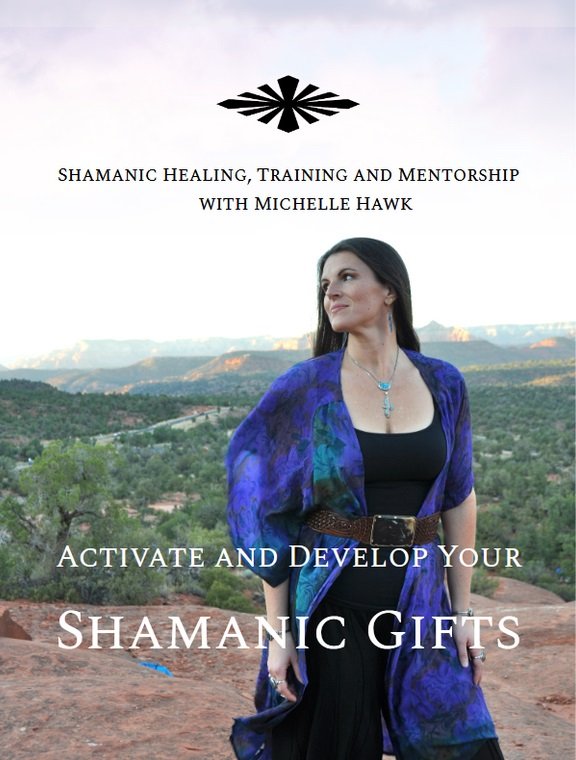
Not ready to commit yet? Start with my free guide, Activate Your Shamanic Gifts, and begin building your own relationship with the living world.

Shaman vs. Shamanic Practitioner: What’s the Difference? (And Why It Matters)

Shaman vs. Shamanic Practitioner: What’s the Difference? (And Why It Matters)

The terms "Shaman" and "Shamanic practitioner" are often used interchangeably, but they carry meaningfully different implications around lineage, training, initiation and accountability. There are also important considerations regarding cultural appropriation and respectful, informed use of these terms. Understanding this distinction matters whether you are exploring Shamanism for the first time, deepening your personal practice, or considering how to describe your own work in the world. Here's how I understand and navigate this distinction, and why I've thought carefully about it for over two decades.

When I began studying Shamanism in 2003 at age 15, the concept of cultural appropriation was not yet widely discussed. As I understood it from my trainings, a Shaman was someone who was deeply immersed in their practice of animistic and mediumistic service, who had received trainings and initiations, and was living a life of service to their community. The indigenous teachers with whom I studied didn’t even use the word Shaman — they had their own terms for the role of that person in their community.

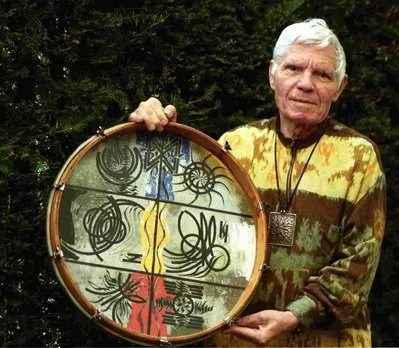
What is a Shaman Hungarian Joska Soos from Clan Baksa Lineage

Jóska Soós, Hungarian Shaman from Clan Baksa

When my mentor gave me a formal Shamanic initiation in 2011, I asked her about using the term “Shaman” to describe myself. She said yes, it would be appropriate for me to use that word according to my many years of deep study, existing commitment to service, and now this initiation. (A Shamanic initiation is a formal ceremony in which a practicing Shaman or lineage holder formally recognizes and empowers a student's readiness to carry and transmit the tradition. My lineage traces directly to Jóska Soós, a renowned Hungarian Shaman from Clan Baksa whose teachings spread this tradition throughout Europe. Keep reading for the story of where the word “Shaman” comes from in my lineage.)

I sat with this inquiry for 3 years. In the meantime, I described my work as Shamanic practice, including Shamanic journeys, Shamanic healing and Shamanic energies. But I didn’t actually call myself a Shaman until 2014, because that was when I finally felt ready to embody the full depth of the term and to publicly demonstrate my commitment to service in this way.

“Shamanism” and Cultural Appropriation

I immediately encountered pushback. In the 11 years since I began my Shamanic studies, the concept of cultural appropriation had reared its head in the zeitgeist. The accusing conversation usually went something like this:

Random person: “You’re calling yourself a Shaman. Are you Native American?”

Me: “No, not to my knowledge.”

Random person: “Then you can’t use that word. That’s cultural appropriation.”

No room for actual conversation. No room for understanding. No curiosity, inquiry or nuance.

At first, I was surprised and taken aback about the argument of, “You can’t use the word Shaman if you’re not Native American.” After all, none of the Native American teachers I had studied with used that word to describe themselves. They had terms in their own language, none of which sounded remotely close to “Shaman.” I even asked a few of my teachers and indigenous friends, all of whom replied “Yeah, that’s not our word.” But I also saw the valid concern about cultural appropriation and the real harm that comes from people carelessly adopting practices and assuming terms without respect, proper acknowledgement and cultural deference.

This is an important opportunity for understanding. So let’s talk about it.

Where Does the Word "Shaman" Come From? (And Why It Matters for Cultural Appropriation)

If you’ve spent any time in Shamanic circles, you’ve probably noticed that the words people use (such as Shaman, Shamanic practitioner, Shamanic healer, and medicine person) vary widely, and can carry strong connotations. These are not just semantic differences. They reflect different relationships to lineage, training, service, and accountability. Here’s how I understand and navigate these distinctions.

Personal Shamanic Practice vs. Professional Shamanic Practice: What's the Difference?

Think about Christianity. There are millions of people worldwide who identify as Christian and maintain a personal spiritual practice. They may go to church, lead a Bible study, pray daily, and share their faith with loved ones. This is a personal practice — meaningful, valid, and complete in itself.

And then there is the ordained priest or minister who has gone through years of deep theological study, received formal training and initiation, and now holds a lineage in service to their community. They have a professional practice, and with it comes a different level of accountability, training, and responsibility.

This same distinction applies to Shamanism. You do not need to hang out your shingle in order to have a meaningful and fulfilling Shamanic practice. You can have a personal Shamanic practice that nourishes you, enriches your relationships, deepens your connection to the land, and flows naturally into moments of support for the people around you. That is beautiful and complete.

What Is a Shamanic Practitioner?

A Shamanic practitioner is someone who works with Shamanic tools and frameworks, such as journeying, working with spirits, energy healing, ceremony, but may not identify with the specific cultural context and weight of the word Shaman. Many people in the Western world choose this term as a way of acknowledging their training and practice while remaining humble about lineage and cultural context.

What Is a Shaman?

I know of two origin stories for the word “Shaman.” The more common understanding is that the term “Shaman” originates from the word “saman” in the Tungusic language of the Siberian people, where it means “the one who knows.” This word was then adopted by white anthropologists and then used as a universal term to describe the role of “spiritual teacher/medicine person” in indigenous communities around the world.

But there is another etymology from my own lineage: my Shamanic great-grandfather Jóska Soós, who came from the Hungarian Shaman Clan Baksa, and who is largely responsible for spreading this lineage throughout Europe, taught that the word derives from “Shamash:” the Mesopotamian sun god. The priests and priestesses of Shamash were known as “Siamas:” the ones who serve the light. A Shaman, in this understanding, is one who serves the light of knowledge, of self-knowledge, of life — and shares that light with the world.

The Shaman is one who serves the light of knowledge, of self-knowledge, of life — and shares that light with the world.”

In most contexts, the title of Shaman (or whatever language-specific term of that particular people) is not self-appointed. It comes through initiation, through years of disciplined training, through community recognition. It comes with deep responsibility: to hold the lineage with integrity, to serve rather than perform, to be accountable to the beings (spirits as well as incarnate teachers) and traditions that have invested their wisdom in you.

Why I Use the Word Shaman

I’ve thought carefully about this. I’ve discussed it with my teacher. I’ve sat with the cultural charge around it. And I’ve chosen to use the word Shaman because I believe it matters to use it with clarity and intention.

What is a Shaman Michelle Hawk Portland Oregon

There is a lot of confusion in the Western world about what Shamanism actually is. There is legitimate harm that comes from people who adopt the aesthetic of Shamanism without the training, the lineage, the ethics, or the accountability. By showing up clearly as a Shaman — with 23 years of practice, with multiple lineage trainings, with a named teacher, a named lineage, and a formal initiation — I have the opportunity to be an educating force about what it means to hold these traditions responsibly.

Do I receive criticism and pushback? Yes. People who don’t know my background sometimes cry cultural appropriation. I’m okay with that, because it’s an invitation to have a more nuanced conversation about integrity, to offer teachings and extend the hand of compassionate understanding and care.

What About Other Terms Like Medicine Person, Healer, Ceremonialist?

Beyond "Shaman" and "Shamanic practitioner," you'll encounter many other terms in these circles: medicine person / woman / man, healer, ceremonialist, spiritual guide, Curandero, priestess / priest, witch. These terms often carry culture- and lineage-specific meanings. Many practitioners — especially those working within indigenous traditions — prefer them over the word Shaman entirely. Whatever term you use or encounter, the most important questions remain the same: What is this person's training? Who are their teachers? What lineage(s) do they carry? And how do they hold themselves accountable to that lineage?

Which Path Is Right for You?

There is no hierarchy here. A personal Shamanic practice is not lesser than a professional one. Calling yourself a “Shamanic Practitioner” or a “Shaman” (or something else entirely) should be deeply rooted in inquiry, integrity and commitment to service. What matters is the quality of your relationship with the work, the land, the spirits, and the people you serve. Whether you’re just beginning to explore Shamanism or you’ve been practicing for years, this inquiry and review of your commitments to service is exactly the right place to start.

Ready to go deeper? Curious where you are on this path? Start with my free guide, Activate Your Shamanic Gifts (below), or explore the Foundations of Shamanism course to begin building a solid, ethical foundation for your practice. Or if you're ready for personalized support, book a call to discuss Shamanic mentorship with Michelle.