Shamanic Training

What Is Energetic Mastery? The Shamanic Framework Every Healer Needs

What Is Energetic Mastery? The Shamanic Framework Every Healer Needs

Energetic mastery is one of the most essential — and most overlooked — foundations of Shamanic practice. Whether you are a healer, a bodyworker, a therapist, a lightworker, or simply someone navigating a spiritual awakening, your ability to work consciously and skillfully with energy determines everything: your safety, your effectiveness, your longevity in this work, and the depth of transformation you can hold for yourself and others. This is the framework I teach in the Foundations of Shamanism course, and in this article I'm going to walk you through exactly what it is and why it matters.

What "Energetic Mastery" Actually Means

Energetic mastery is not a mystical achievement reserved for advanced practitioners. It is a set of practical, learnable skills — tools you can develop through consistent practice — for working intelligently, confidently, and fluently with your own energy and with energy in the world.

Think of it as foundational fitness for your energy body.

No matter what sport an athlete plays, it helps to have a solid base level of physical fitness: strength, mobility, lung capacity, endurance, flexibility. All athletes have this foundational presence in the body, and then they specialize based on their particular path. A long-distance runner has different needs than a sprinter. But the base serves everyone.

Your energy body works the same way. The foundational skills of energetic mastery serve you whether you are doing Shamanic healing, mediumship, Reiki, somatic work, or simply trying to navigate the world without absorbing everyone else's energy.

When I began my studies in Shamanism and energy healing in 2003, the topic of energetic mastery and energetic hygiene was largely glossed over. I was told to use the power of intention and visualization, affirmations and invoking my guides for protection. While this instruction was partially helpful, I felt like there was something missing. I still felt depleted after giving intense Shamanic healing sessions, and despite my best intentions, I found myself susceptible to taking on other people’s energy in the world.

I knew there had to be more effective energetic hygiene protocols that would help me feel stable, secure and empowered in my energetic mastery. I eventually learned some of these practices from other teachers, and developed my own through my Shamanic healing practice. I noticed what practices were most effective and which made the biggest difference in my overall well-being. Based on this, I developed the Foundations of Energetic Mastery protocol that I now teach in my Shamanic courses.

Why Energetic Mastery Matters for Healers and Spiritual Practitioners

If you're in any kind of healer, helper, or caregiver role, the stakes are particularly high. You are constantly interfacing with other people's energy — their emotions, their wounds, their spiritual material. Without foundational energetic skills, that exposure accumulates. You end up carrying things that aren't yours. You are more susceptible to burnout. Your nervous system strains. You find yourself depleted after sessions that should feel energizing, or at least neutral.

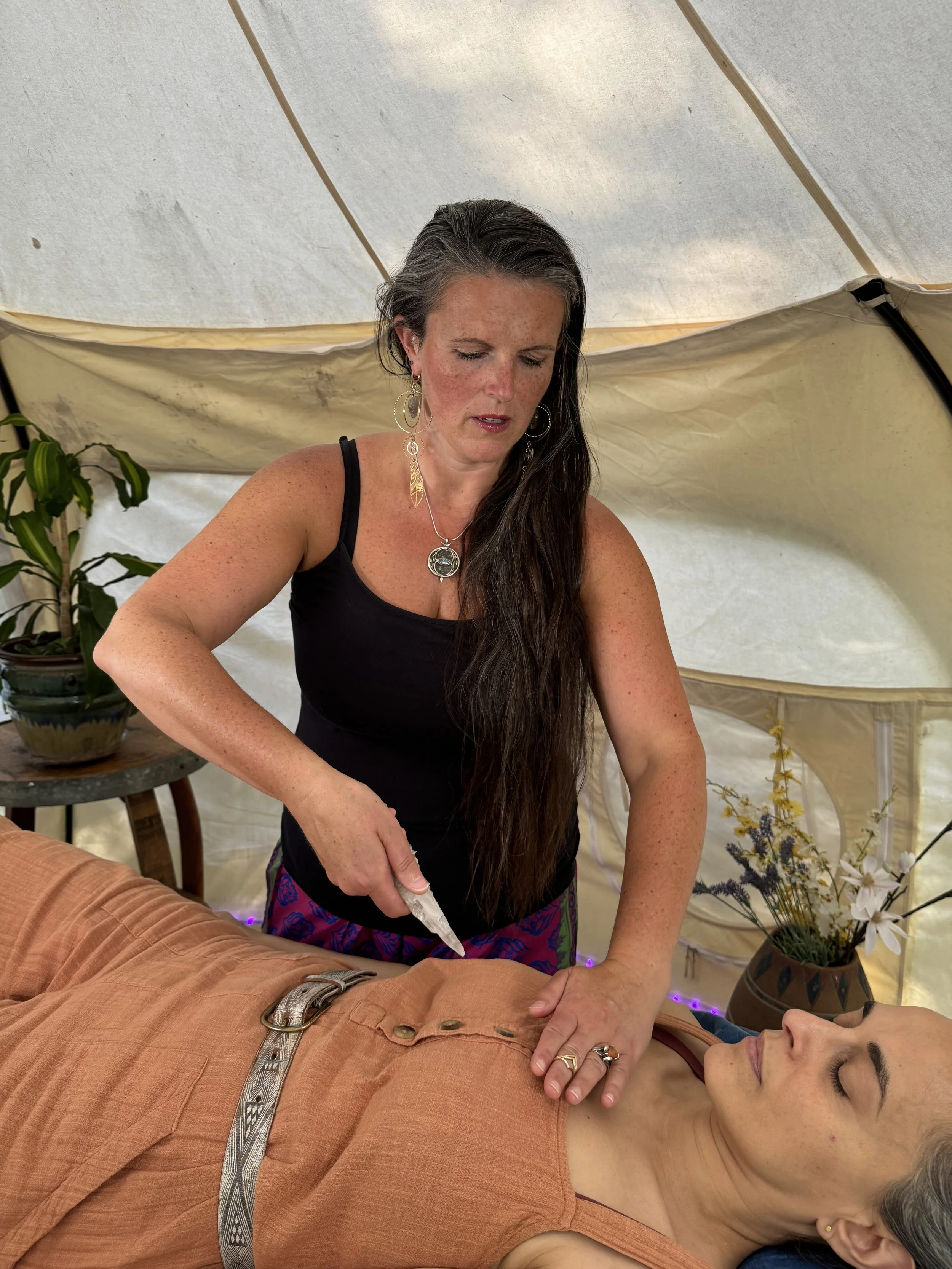
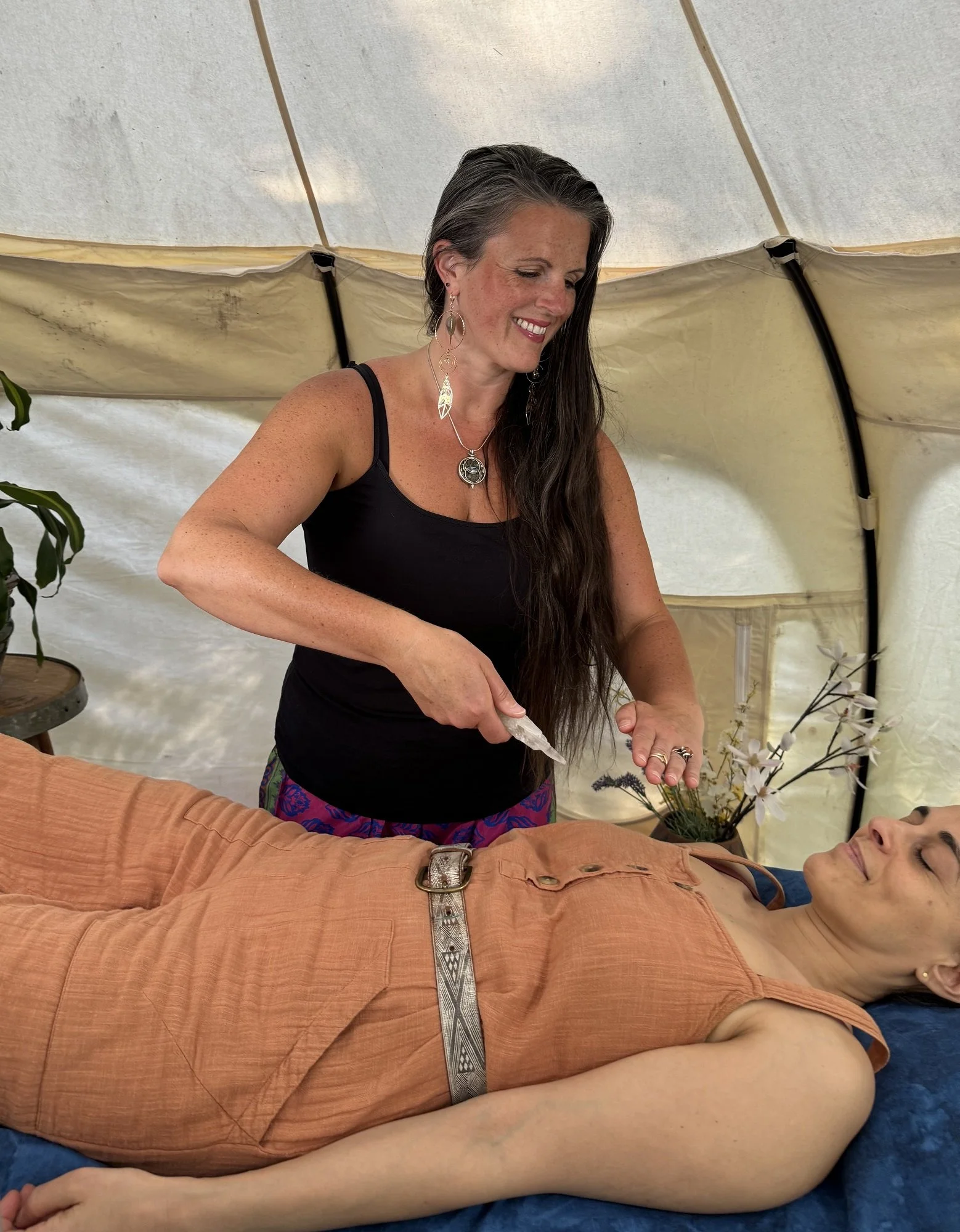
Energetic Mastery for Shamanic Healing with Michelle Hawk

Energetic mastery gives you:

Safety. The principles of energetic hygiene I teach are the energy equivalent of washing your hands after a hospital visit. You would never hug people, shake hands, travel on an airplane, and never wash your hands. That's just a bad idea. Your energy body deserves the same intelligent care.

Better health and efficacy. When you know how to clear, ground, and maintain your field, everything in your practice works better. Your sessions are cleaner. Your intuition is clearer. Your channel is more open.

Increased power and capacity. These practices support your life force, your vitality, and your ability to hold very powerful energy without it spinning you out. You can do deep, potent work without burning through your resources — so you can show up in service in a way that is resourced, regulated, and confident.

The Pyramid of the Foundations of Energetic Mastery

I teach this framework as a pyramid, because the base makes everything else possible. Here are the six layers:

1. Consciousness Practices (the base) — developing your energetic fluency: the ability to sense, feel, project, and direct energy in your body, your personal field, and the space around you. This is the foundation of all other layers.

2. Clearing — clearing your body, your energy field, and your space. Essential before, during, and after any energy work.

3. Grounding — arriving in full presence. Connecting to the Earth and to your body so you can work from a stable, rooted place.

4. Centering — gathering all of your energy back to you. Reclaiming what has scattered, leaked, or been given away.

5. Cultivation — actively increasing your energy, your capacity, and your life force. Building the vessel so it can hold more.

6. Protection (the top) — the final seal. And here's what often surprises people.

Why Protection Comes Last

Many people who come to me for support with energetic hygiene are primarily concerned with energetic protection. They want to know how to shield themselves, how to keep negative energies out, how to stay safe in the spirit world. And I understand the concern — it feels urgent.

But protection is the last layer of the pyramid, not the first. And here's why.

Most of what we perceive as protection issues are actually cleared up by doing the other work first. If you were to learn protection techniques without doing the clearing, grounding, centering, and cultivation work first, you would still remain vulnerable in other ways. A shield over an uncleared field is like putting a clean coat over dirty clothes. You still need to do the laundry.

By the time you've done the foundational work — by the time your field is clear, you're grounded and centered, and you've cultivated your capacity — protection becomes almost a natural consequence. The cherry on top. It seals and completes what is already solid, rather than trying to compensate for what is missing.

I see this particularly in students and clients who have an activated channel or mediumship practice. While they may be very psychically open, they lack the foundational energetic architecture to remain stable and safe in their channeling experience. This often leads to overwhelm, unwelcome attention from spiritual forces, and even psychic attacks and entity attachments. These people come to me claiming that their shields don’t work, asking for better protection practices. Every single time, when I redirect them away from protection and towards the other foundations of energetic mastery, they notice a huge difference and feel much safer and more stable in their channeling experience.

The Two Modes: Daily Practice and Spot Treatment

Every practice in this framework has two versions.

Daily practice is your training — your energetic fitness maintenance. Like going to the gym or to yoga class, not because anything is acutely wrong, but because consistent practice builds strength, capacity, and fluency over time.

Spot treatment is for acute situations. You just got out of a really draining meeting. You worked with a difficult client. You went somewhere energetically heavy and you can feel it in your field. Spot treatment is how you reset, clear, and return to yourself in real time.

Knowing both versions of each practice — and knowing when to use which one — is itself an important skill.

Energetic Mastery Is a Learnable Skill

There's a misconception in the world of energy work that some people can just do this naturally and others can't. I really don't believe that's true, and it's not what I've observed in years of teaching.

Yes, some people grew up in environments that were conducive to energetic sensitivity, and they may have a head start. But that doesn't mean someone who grew up in a more shut-down or discouraged environment can't develop these skills and become genuinely confident in them through practice.

Just like Michael Phelps has a physiology that naturally inclines him toward excellence in swimming — and he is exceptional — someone without that physiology can also excel through dedicated training. The body learns. The energy body learns too.

These are skills. These are muscles. They develop with use.

Ready to Build Your Foundation?

The Foundations of Energetic Mastery is woven throughout the entire Foundations of Shamanism course — it's not a single module, it's a thread that runs through all eleven weeks of the program because it underlies everything else we do.

If you're already on a Shamanic path and want personalized support building these foundations, 1:1 Shamanic Mentorship may be the right next step.

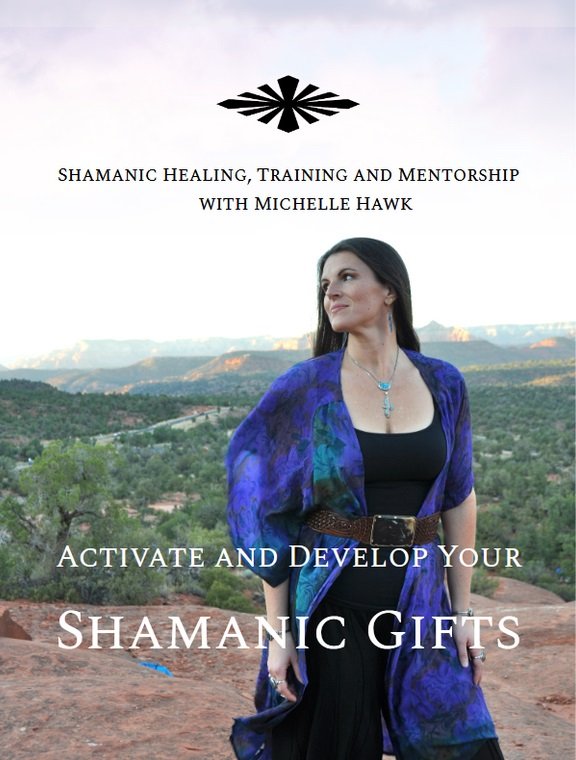
Not ready to dive in yet? Start with the free guide, Activate Your Shamanic Gifts — a beautiful first step into conscious, grounded Shamanic practice.

Ethical Shamanic Practice: The Three Core Principles of Working with the Spirit World

Ethical Shamanic Practice: The Three Core Principles of Working with the Spirit World

Ethical Shamanic practice is built on relationship — not technique. And like any healthy relationship, it requires certain qualities to thrive. Over years of practice and teaching, I've distilled these qualities into three core principles I call the Three C's: Context, Consent, and Collaboration. These aren't rules imposed from outside. They are the natural expression of genuine, respectful relationship with the living world — with the land, the spirit realm, and all the beings we work alongside in Shamanic practice.

My Introduction to Context, Consent and Collaboration in Shamanic Practice

When I was in second grade, my school went on a trip to the high desert in central Oregon. At that point in my life, visiting a different bioregion was a huge revelation to me. I was accustomed to the towering firs, waterfalls and cascading moss of the pacific northwest rainforest. Encountering such a distinct environment with a completely different architecture of climate, geology, and inhabitants opened my eyes to new awe for the genius of nature. As we learned about life in the desert, I felt the tremendous importance of understanding the constellation of beings, elements and land, and how they all work together in a way that is specific and ideal to that particular place.

That moment planted the seeds of what would later become the three principles I now teach as the foundation of all Shamanic practice: Context, Consent and Collaboration. For the first time, I clearly realized the significance of this dynamic in nature. Later in my teenage years, these ideas took on more structure and definition as I began my Shamanic study and learned practices from my teachers about how to make offerings and communicate with land and nature spirits, and bring these principles into Shamanic healing sessions.

Let’s explore the Three C’s of Shamanic practice and how they can help you deepen your relationship with nature and the spirit realm.

Context: Know Where You Are

Context is the first and most foundational C. In Shamanic practice, context means understanding the existing architecture of wherever you are. What land are you on? Who are the indigenous peoples or original stewards of this place? What are the common plants, animals, and salient geological features? What is the history of this land — its transformation, its grief, its gifts? Who are the spirit guides who work with these frequencies and come from this place?

Context also encompasses the cultural lineage you are working within. Are you drawing on a specific tradition? A specific teacher? A specific geography? The more clearly you understand your context — both the land context and the lineage context — the more effectively and respectfully you can work.

Practically, this means: wherever you are, take time to learn about the place. Research the bioregion. Learn the plants and animals, and their relationships with each other. Research the history. Acknowledge the peoples who have stewarded this land before you. This is not only ethically important — it also makes your practice more powerful, because you are working in alignment with the actual living intelligence and existing architecture of the place rather than imposing something onto it. This is foundational to a practice of ethical Shamanism — there is no true relationship without understanding.

Consent: Ask Before You Act

Ethical Shamanism Michelle Hawk Portland Oregon

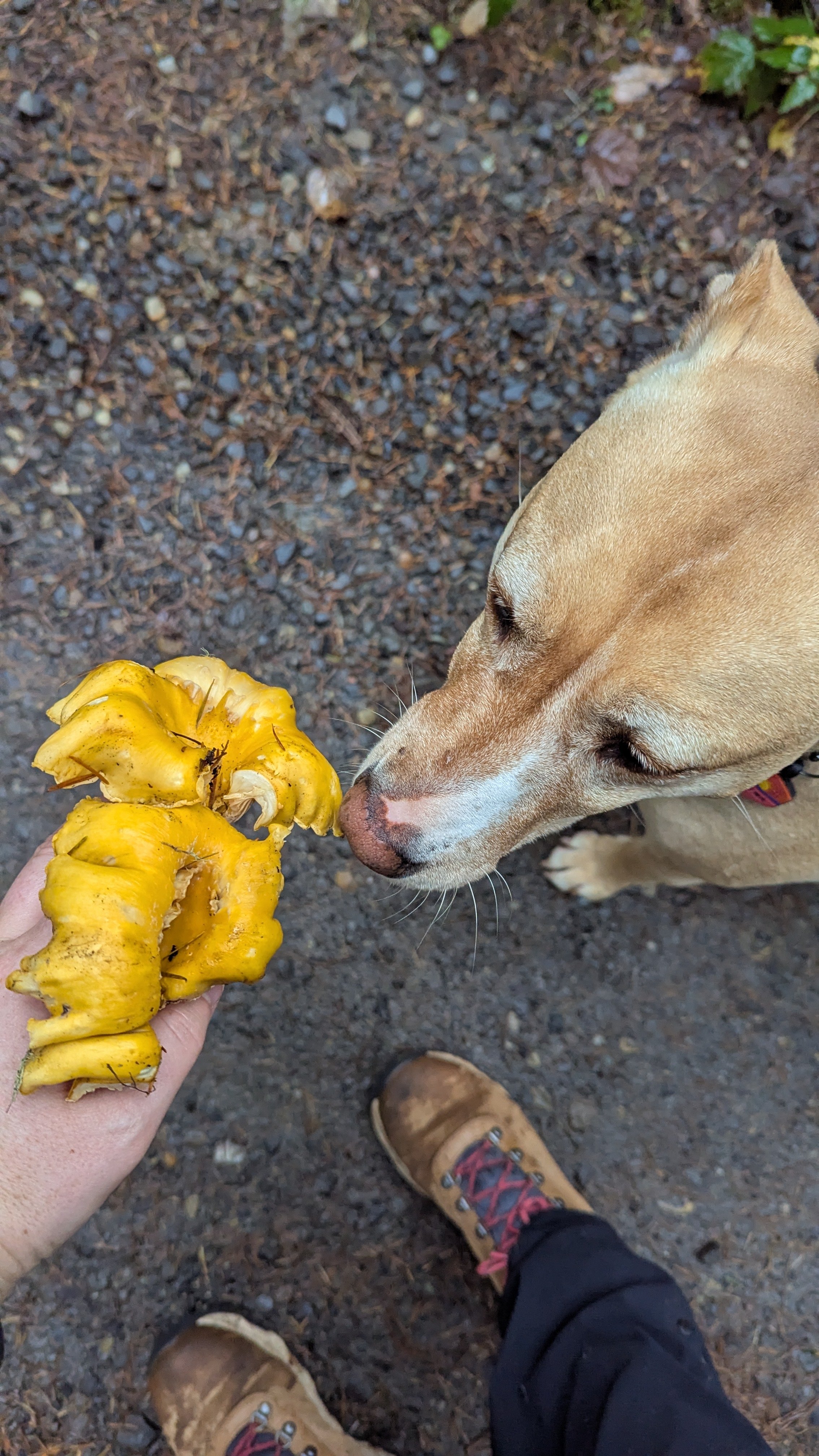
Asking for and receiving consent to harvest Chanterelle mushrooms.

Earth is a free will planet. This is one of the fundamental principles of Shamanic cosmology. Nothing can be compelled. Nothing should be compelled. Everything we do in relationship with the spirit world, with land and nature spirits, with the beings we work alongside — all of it happens in the context of consent. In an animistic worldview, consent isn’t just a courtesy — it's a recognition that everything around us is genuinely alive and sovereign.

This means asking before you take anything from nature — a mushroom, a branch, a stone, a handful of herbs. It means asking the land or the space before you do ceremony, Shamanic healing work, or any kind of energetic practice. It means listening for the response, which may come as a felt sense of openness or resistance, as a sound, as an image, as a physical sensation or physical messenger. The principle of asking and attuning before acting is at the heart of what I mean by ethical Shamanism.

What does it feel like when consent isn’t present? I clearly remember an experience several years ago where I was walking through the forest, looking for a space to do some Qigong and Shamanic ritual practice. I came across a spot that visually looked beautiful and appealing. When I opened my senses to ask if I was welcome to practice there, I felt incredibly uneasy. All of a sudden, the birds all went quiet, and I felt prickling on the back of my neck. I acknowledged the refusal and kept walking. As soon as I left the space, the birds resumed singing and the sensation faded. I kept walking until I came across another space that answered my request with warmth, welcome and a feather on the ground.

Collaboration: You Are Never Alone

The third C is perhaps the most liberating: you are never doing this alone. Shamanic practice is always collaborative. You are working alongside your spirit guides, your lineage teachers, the land spirits of wherever you are, the medicine spirits of the plants and elements, your own higher self. All of these are available to you as partners, allies and collaborators.

The shift from ‘I am doing this’ to ‘we are doing this together’ is transformative. When you’re holding space for someone in a Shamanic healing session or ritual, you don’t need to carry it all yourself. When you’re navigating something difficult in your own life, you don’t need to navigate it alone. When you’re facilitating a group or a retreat, you can invite the land itself to hold the container with you.

Collaboration requires the skill of asking, the willingness to receive and the reciprocal flow of energy through offering back. All of these are practices, and like all practices, they deepen with time, attention and devotion.

Putting the Three C’s Into Practice

As you are building your own Shamanic practice, here is a simple way to bring all three C’s into any Shamanic work or ceremony.

  1. Before you begin, take a moment to orient to Context: where am I? What is the living architecture of this place? What do I need to understand about these beings and this environment?

  2. Then move to Consent: I am asking permission to be here in this way. I am listening for the response and waiting for a full yes.

  3. Finally, open to Collaboration: I am not doing this alone. I am working with my guides, with the land spirits, with all the beings who choose to support this work for the highest and greatest good. May my practice be a devotional gift of reciprocal generosity.

This three-part orientation takes only a few minutes and it fundamentally changes the quality of everything you do. It moves you from performing a technique to being in genuine relationship. That difference is everything.

Ready to Deepen Your Shamanic Practice?

The Three C's — Context, Consent and Collaboration — are woven through everything I teach, from individual healing sessions to long-term mentorship to the Foundations of Shamanism course. They're not just principles to read about. They're skills that develop through practice, guidance and genuine relationship with the living world.

If you're ready to build an ethical Shamanic practice rooted in integrity, here's where to go next:

Foundations of Shamanism — my 11-week live online course covering the essential skills of ethical, grounded Shamanic practice.

Shamanic Mentorship — 1:1 support for your unique path of healing and awakening.

Shamanic Healing — powerful sessions for deep personal healing work.

Not ready to commit yet? Start with my free guide, Activate Your Shamanic Gifts, and begin building your own relationship with the living world.