Animism

Land and Nature Spirits: What They Are and How to Work With Them

Land and Nature Spirits: What They Are and How to Work With Them

Working with land and nature spirits in Shamanic practice are among the oldest and most fundamental spiritual relationships. In animistic traditions worldwide, the natural world is understood to be alive — not just biologically, but spiritually. Every tree, stone, watershed and animal carries both a physical and an etheric presence, available to us as ally, teacher and guide. I've been in relationship with land and nature spirits since childhood, long before I had words for what I was experiencing.

How I First Encountered Land and Nature Spirits

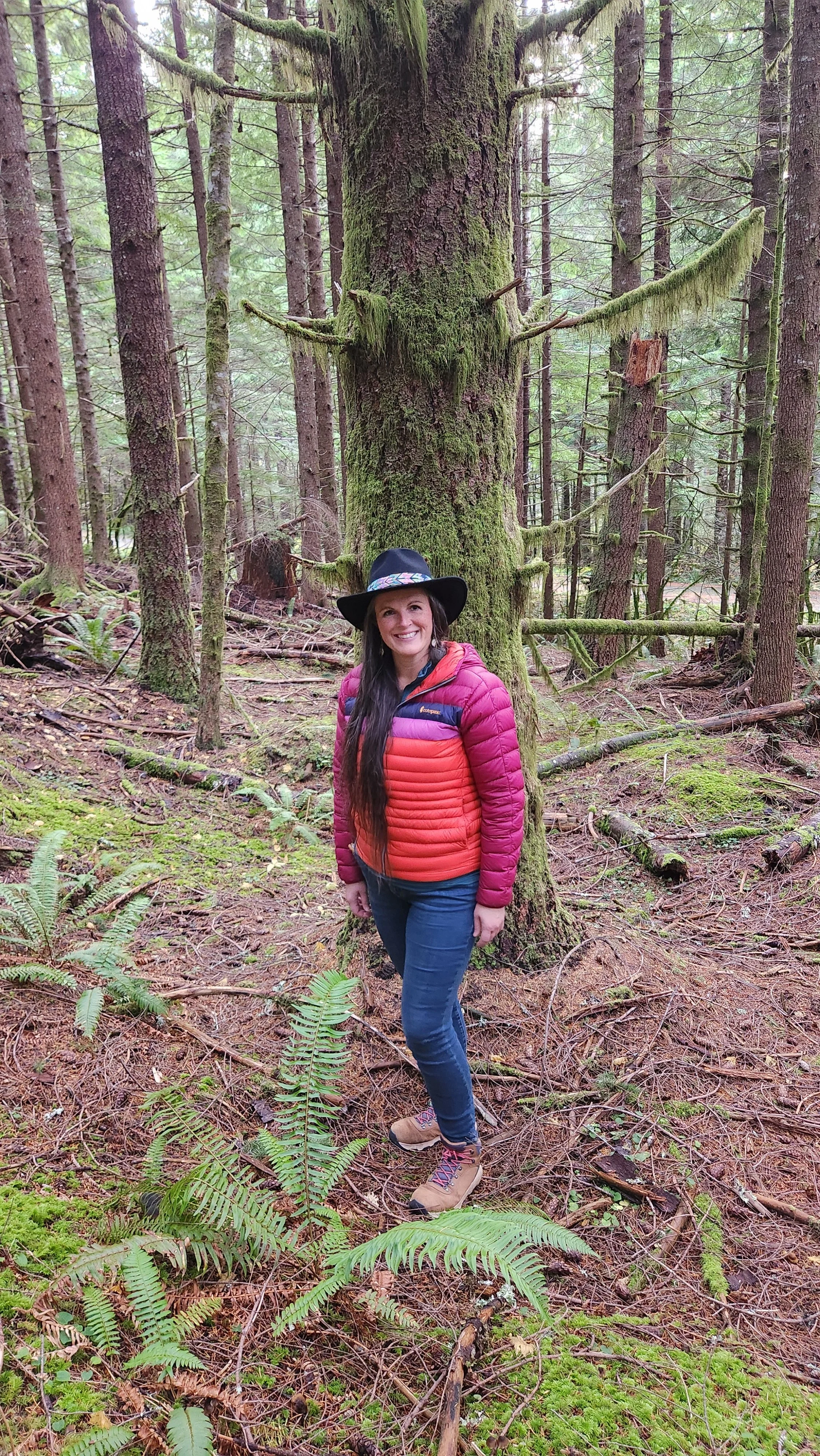
When I was growing up, my favorite tree was a massive Big-Leaf Maple along a hiking trail in the forest near my house. I met this tree for the first time on a class field trip hike when I was 8 or 9, and then returned regularly to hike with my family. Every time I passed, I would stop to say hello to the tree, give it a hug, and stand in awe at its towering elegance.

Land and Nature Spirits in Shamanism Michelle Hawk

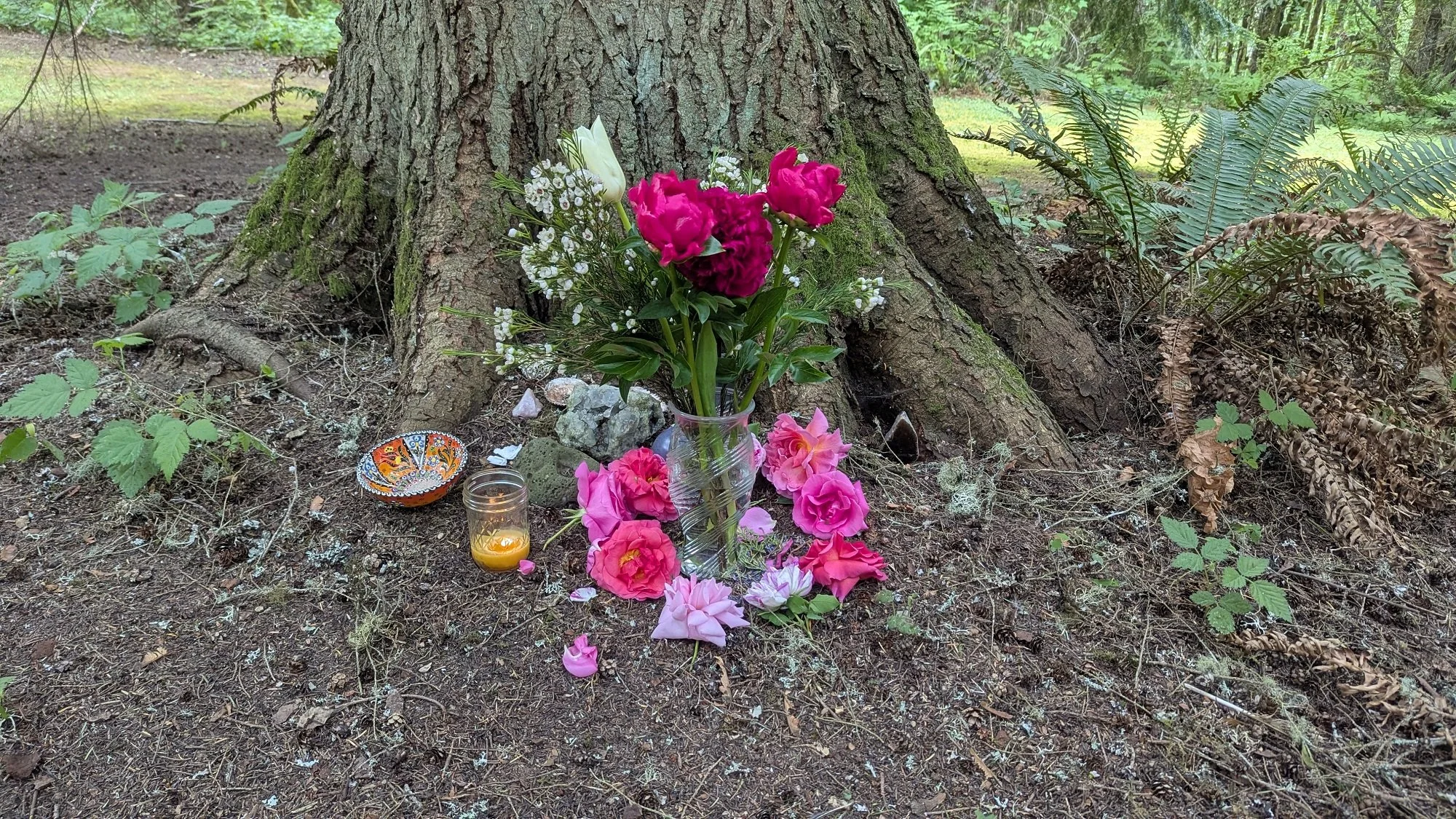
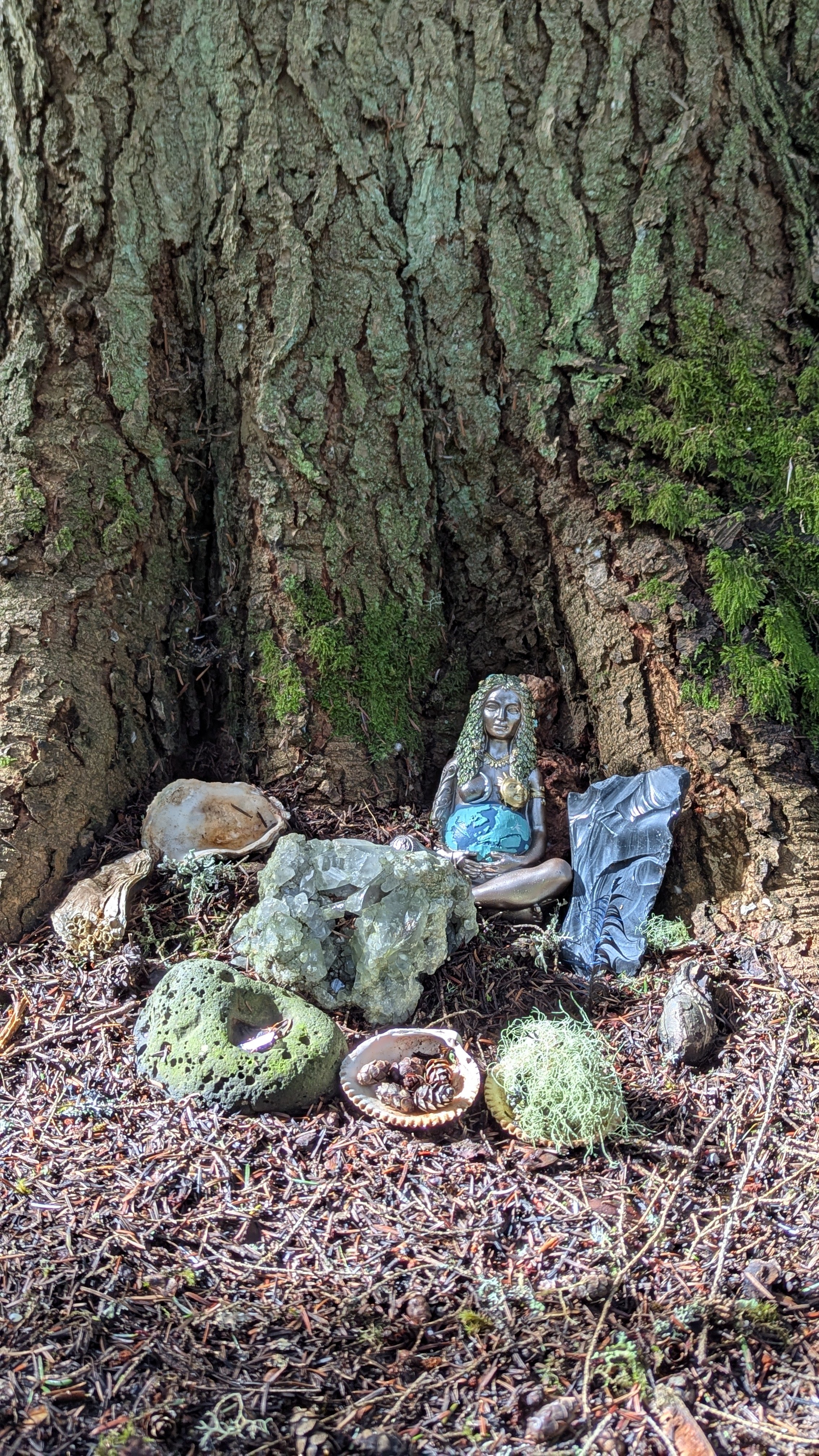
Later, as a teenager developing my Shamanic practice, I started to make offerings to the tree. I would bring little crystals, share some water, and offer a prayer of gratitude. The energy of this tree was so grounded, calm and expansive, and I immediately felt a sense of peace and connection whenever I visited. As I continued my study of Shamanism and learned more about land and nature spirits, I came to understand that this special being was a Guardian Tree of the local ecosystem – a powerful nature spirit who helps to anchor and protect the etheric grid of the area.

Since then, I have had the honor of meeting and working with many other Guardian Trees. The land where I live now is home to a massive Hemlock who serves as a temple keeper of this area. She has anchored the prayers, ceremonies and offerings of me, my partner, and countless students and clients.

In Shamanic practice, we don’t work alone. We are always working in relationship — with the Earth, with the beings who inhabit her, and with the animating forces that move through the physical and non-physical world alike. Land and nature spirits are at the heart of this relationship. They are among our most important allies, our most consistent teachers, and often our most overlooked resources. (Read also: What Is Animism? The Ancient Worldview at the Root of Shamanism.)

What Are Land and Nature Spirits?

Land and nature spirits are the individual and collective animating forces that correspond to animals, plants, stones, elements, and geological features. They have both an embodied and an etheric dimension. The Hemlock tree in my yard has a physical body, and also a spiritual body, a consciousness, a medicine.

Some land and nature spirits have a physical presence on Earth right now. Some exist primarily in the etheric realm or in myth. Dragons are very real — just not presently embodied in the way a sparrow or a cedar tree is. Unicorns, pegasi, and griffins exist in different traditions and in the collective mythological consciousness of humanity, even without physical form.

The I, the We, and the All

When working with land and nature spirits in Shamanism, I find it helpful to think in three layers. Take the Guardian Hemlock tree on the land where I live. She is the I — one individual Hemlock with her own personality, her own medicine, her own energetic signature. She is also part of the We — the Hemlock tribe, the forest community, all connected through root systems, chemical signaling, and the mycorrhizal network. And she is part of the All — the tree nation, the Standing Nation, the collective consciousness of all trees everywhere.

When you begin working with a particular coyote who visits your yard — playful, tricky, laughing at you — you’re meeting the I. When you encounter coyote as a collective frequency, as a medicine, as an archetype of the trickster, you’re meeting the We or the All. Both are real. Both are available to you.

Why These Relationships Matter

Imagine holding space for a Shamanic healing session, a retreat, or even a difficult conversation. If your personal energy field is carrying the entire weight of that container, it’s exhausting. But when you’re working in collaboration with the land spirits of where you are — the guardian trees, the local watershed, the particular mountains and stones — you’re not doing it alone. The land itself becomes a co-facilitator. It helps ground the container, process and compost released energy, and hold the field with stability and care.

Land spirits are particularly excellent co-facilitators for grounding and stabilizing a container, protection and clearing, composting released energy, and ensuring your Shamanic work moves in alignment with the existing flow of the place.

Start Local

One of the most important principles in building relationships with land and nature spirits is this: start with where you are. Not the most glamorous tradition or sacred sites you’ve read about. Not the most powerful-sounding beings from somewhere far away. The land where you currently live.

Your animal body is literally made of the land where you live — the water you drink, the air you breathe, the foods grown in local soil. Your body is attuned to the frequencies, the medicine, the particular climate and mineral composition of your place. Some of your most powerful, supportive, and intimate relationships will be with your local land and nature spirits, because that is home.

Land and Nature Spirits in Shamanic Practice Michelle Hawk

I often assign my Shamanic mentorship clients the following daily practice, which I also recommend to you: Go outside every day and visit the same tree, rock, water feature or plant (even a humble dandelion growing through a crack in the sidewalk). Make an offering, then wait and notice what you notice. Over time, you will begin to develop a deeper relationship with that being.

How to Begin

You don’t need a formal ceremony or specialized training to begin building relationships with the land and nature spirits where you live. You need presence, attention, and respect. Start by going outside without an agenda. Walk. Notice what draws your attention. Which tree do you keep walking past but never stop for? Which bird keeps showing up? Begin there. The animals that appear repeatedly — what Shamanic practitioners often call power animals — are frequently nature spirit relationships trying to make themselves known. Ask before you take anything from nature. Learn the names — both common and scientific — of the plants and animals where you live. Research who lived on this land before you. The more you know about the context of where you are, the richer your relationships with its spirits will become.

Ready to Go Deeper with Land and Nature Spirits?

Working with land and nature spirits is one of the most grounding and transformative skills you can develop as a Shamanic practitioner — and it's a central thread woven throughout the entire Foundations of Shamanism course.

Not ready for the full course yet? Start with my free guide, Activate Your Shamanic Gifts (below) — a beautiful first step into your own Shamanic practice.

And if you're looking for personal support navigating your relationship with the spirit world, Shamanic Mentorship may be exactly what you need.

What Is Animism? The Ancient Worldview at the Root of Shamanism

What Is Animism? The Ancient Worldview at the Root of Shamanism

As a kid, I always loved animals, nature and magic. All of my favorite books featured talking animals, young people learning to live harmoniously with nature, and discovering magical powers from that connection. When I read stories about sorceresses healing people with magic, I started practicing "healing spells" on my diabetic dog. I talked with the trees and listened intently to their replies. I learned the personalities of the stones in my backyard.

I didn’t have the words for it at the time, but I later discovered that my childhood worldview was not just my imagination or wishful thinking, but was instead an ancient and fundamental philosophy common to people all over the Earth for thousands of years. And this worldview is known as animism. It is a worldview older than any religion, deeper than any tradition, and more intrinsic than most people realize.

Before there were temples, before there were texts, before there were organized religions, there was animism: the belief that everything is alive. That the tree outside your window has presence. That water has memory and the rivers sing songs of what they have seen. That the mountain watches. This is not mythology. This is the original worldview of people everywhere on Earth, and it is the foundation upon which all Shamanic practice stands.

What Is Animism, Exactly?

Animism is the belief that all things are alive and that all things are connected through a shared web of consciousness. The word itself comes from the Latin anima — the immaterial force that animates form. In animistic understanding, that animating force is not confined to living creatures as science defines them. Stones have anima. Mountains have anima. The elements — fire, water, air, earth — have anima. Nothing is truly inert.

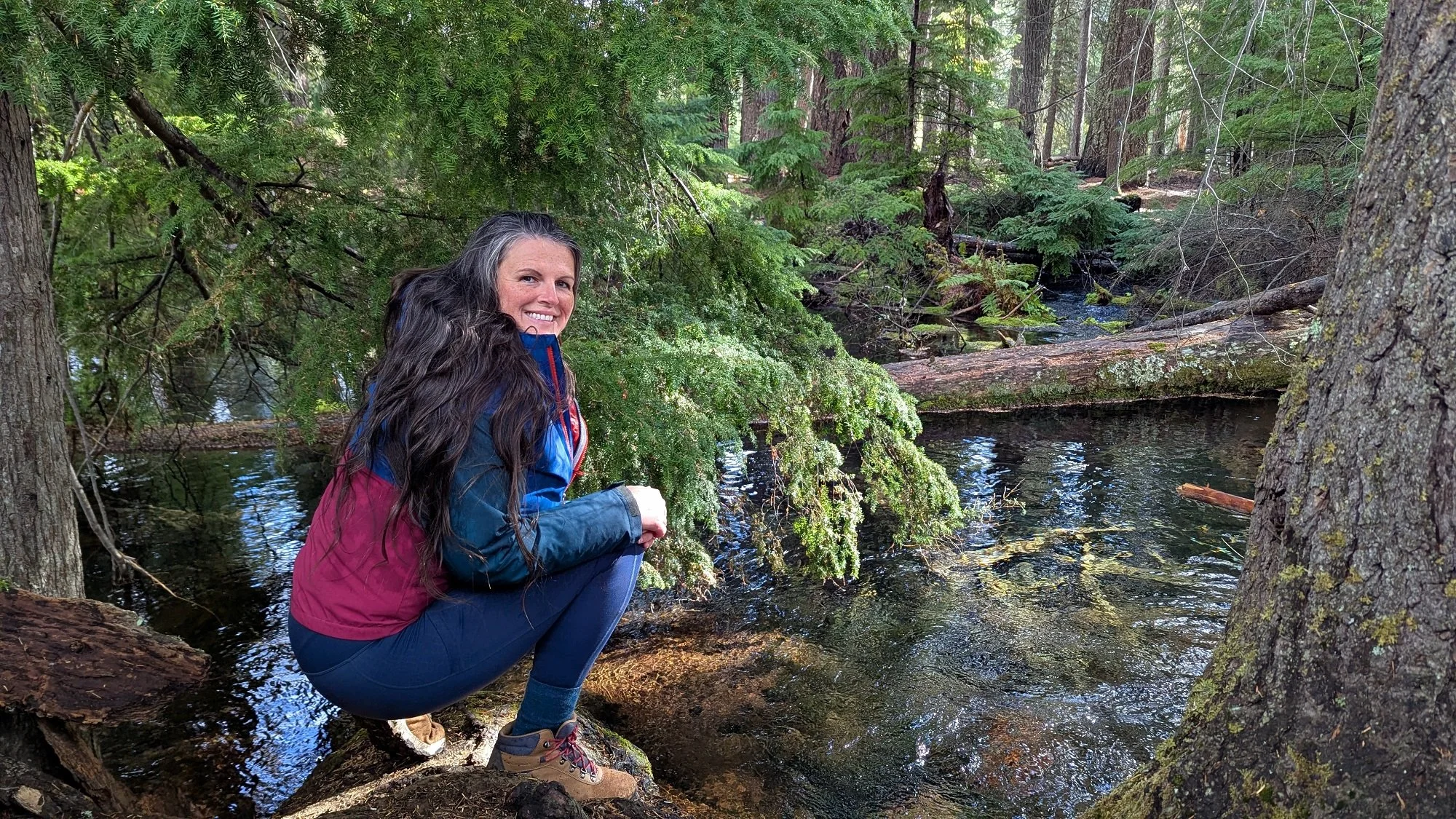
What is Animism Michelle Hawk connecting with nature

You Already Know This

Most of us have already experienced animism, even if we didn’t have the word for it or consciously recognize it at the time. If you’ve ever felt someone’s energy or a presence leave their body at the moment of death, you have felt anima. There is a visceral, unmistakable difference between a body with life in it and a body without. That difference is anima.

If you grew up loving folk tales where animals could speak and trees had personalities and the forest was a living, breathing character, you were responding to animistic storytelling, the oldest form of human story. That sense of everything being alive, everything mattering, everything in relationship — that is animism, and it is your birthright.

Animism Is the Original Human Worldview

Anthropologists have documented some version of animistic belief in every human culture that has ever existed. It is not a tradition that belongs to any one people or any one part of the world. It is the baseline orientation of human beings on Earth. The concept of deities (such as the queen of the ocean, the god of the storm, the spirit of the forest) arose from animism. Before gods were personified, they were forces. Forces of nature. Forces of life. That recognition of aliveness in all things is where religion began.

Non-animistic worldviews are extremely recent in human history. A few thousand years may feel like a long time, but on the scale of human existence on Earth, it is a small blip. The majority of human experience, as seen in the cave paintings, the harvest rituals, the medicine songs, the offerings left at rivers and trees and stones — all of it was animistic.

How Animism Relates to Shamanic Practice

Shamanism is an animistic practice. You cannot separate the two. Shamanic practice is built on the recognition that all things are alive and in relationship with each other, and that we, as humans, have both the capacity and the responsibility to be in conscious, respectful, collaborative relationship with the living world around us.

This is why Shamanic practice involves working with land and nature spirits, communicating with the spirit realm, and developing a personal relationship with the specific plants, animals, elements, and beings of the land where you live. Because if everything is alive, then everything is available as teacher, healer, guide, and ally.

Why Animism Matters Now

We live in a world of profound disconnection — from nature, from community, from our own bodies. Many people feel a deep, unnamed homesickness, like a longing they can’t quite locate or name. Animism offers a frame for understanding that longing: it is the longing to return to relationship. To belong again to the living world. To stop being a witness to nature and become a participant in it.

Shamanic practice is one path back. Not as a regression to some idealized past, but as a reclamation of something ancient and fundamental that has always been available to us. You belong to Life, and Life loves you. And the web of aliveness that animism describes has always been there, waiting for you to remember it.

nimistic earth-based spirituality — the belief that all things are alive as taught by Shaman Michelle Hawk

Beginning Your Animistic Practice

You don’t need a ceremony, a teacher, or a lineage to begin developing an animistic relationship with the world around you. You need attention. The simplest practice is this: go outside. Leave your headphones at home. Walk without a destination. Notice what you notice. A bird that holds your gaze. A tree your hand moves toward. A stone that catches the light in a particular way. These are invitations. This is animism beginning to come alive for you.

Ready to go deeper? Download my free guide, Activate Your Shamanic Gifts (below), to begin exploring your own connection to the living world. Or if you’re ready to commit to a structured path of practice, learn more about the Foundations of Shamanism course here.

Why do I practice Shamanism?

Why do I practice Shamanism?

(And why you may want to, if you are called to it.)

I don’t practice Shamanism for my clients. I practice it first and foremost for Life.

I practice Shamanism because I love Life. By that I don’t only mean my life specifically, I mean capital-L Life itself. I love that Life exists.

I love that consciousness has manifested in the incarnate. I love that so many different bioforms have evolved over millennia to cooperate and live in concert with each other. I love that plants eat sunlight and trees sing to each other through the mycelial network. I love that elephant matriarchs remember for decades where to find water and pass this knowledge down to their daughters and granddaughters. I love the song of the red-winged blackbird. I love that hawthorn thorns eventually grow into branches, and what starts out as sharp and protective evolves into a flowering wand that bears abundant fruit.

I love that Life exists, and I am so grateful that I get to be a part of it.

I practice Shamanism to be awake in my life, to celebrate Life and to collaborate with this grand symphony of aliveness all around me every day.

I practice Shamanism as a student and steward of Life. I study the cycles. I study the darkness, hibernation and death. I study decay, rotting logs, and bones left after a cougar kill and scavenging coyotes. I study the explosion of budding flowers, eagles flirting, squirrels fortifying their nests. I study the rise and fall of the river. I study the movement of the stars and the planets, and the pattern of wheeling vultures.

I study Life so that I may collaborate with it, move in alignment with the flow of creation and be a harmonious contribution to something so, so much bigger than me: Spirit. The Great Unknowable. Thou. Life.

By studying Life, we learn its flow and rhythm. We learn what expands and supports and generates Life, and what contracts or restricts it. We learn to feel and collaborate with this flow of Life in our bodies, our health, our relationships, our daily experience. Healing and growth is the study and practice of Life-generating worldview and behaviors, and of course that offers a huge personal benefit to us.

But that’s only a tiny fraction of the whole. And the longer I practice Shamanism (now over 20 years), the more I feel absolutely certain that it’s not about us and our personal experience at all.

Something beautiful comes from de-centering the self. This inherently goes against all of the conditioning and foundation of modern, western culture (especially in the US) which is based on individualism and, to be brutally honest, this weird fetishization of selfishness. My rights. Look out for #1. Selfies. If it’s not on social media, it didn’t happen. Endless navel-gazing and pathologizing and self-diagnosing and therapizing and making it all about me, me, me.

How lonely. How small. How inherently blind.

But what happens when we de-center ourselves? What happens when we truly embrace that if I am sovereign, it means that all beings are sovereign? What happens when we remember that if I am a unique and special expression of consciousness, it means that all beings are unique and special expressions of consciousness? What happens when we believe that if I am devoted to cultivating life in myself, it means I am devoted to cultivating life for all beings? What happens when we make our Earthwalk into a prayer of gratitude and generosity to Life?

How connected we become. How expansive. How loving.

De-centering the Self helps us remember that consciousness is living itself through us. Life is living through us, just as it is living through all things. It helps us to take responsibility for what we are personally accountable for and to surrender burdens that do not belong to us. It helps us to be generous. It helps us to remember that we belong. You belong to Life, and Life loves you.

I practice Shamanism because I love Life, and I love that I get to be a part of Life, but even more than that, I want Life to thrive. I want so deeply with every part of my being to devote every day to honoring and advocating for the sovereignty of all beings. I am so excited to live in this world and cultivate relationships with forms of Life–people, plants, animals, mountains, elements–so that I can know Spirit in as many ways as possible. I practice Shamanism because I know truly that by devoting myself to Life, and collaborating with Life, and studying Life, it benefits me, and everyone around me, and all beings on Earth, and the Earth herself.

I practice Shamanism because it is the best way I know how to love myself, and you, and Thou, Life.

I cannot give you your why. I cannot make you fall in love with Life. I cannot give you the key that will make you excited to wake up every day and participate in this gorgeous symphony. That is for you to discover, if you haven’t already.

But I can help you learn how to listen. I can teach you Shamanic practices. I can guide you through Shamanic journeys, mediumship cultivation and help you connect with the spirits. I can give you the best tools that I know of to study Life, to awaken to your animistic consciousness and mediumistic gifts, to honor the spirits, to connect with something bigger than yourself.

Are you called to Shamanism?

Have you experienced a Shamanic awakening, but aren’t sure where or how to begin developing your practice?

Do you already have a Shamanic practice but are looking for deeper support, personal mentorship or healing work?

Get Support:

>>>Book a call with me to talk about your journey with Shamanism and what type of support is right for you!