Shamanic Practice

What Is Beltane? A Shamanic Celebration of Abundance, Fertility and Sacred Union

What Is Beltane? A Shamanic Celebration of Abundance, Fertility and Sacred Union

Beltane is one of the most alive and potent holy days in the Celtic Wheel of the Year — a fire festival devoted to fertility, abundance, and the sacred creative power of life in full bloom. In Shamanic and Earth-based spiritual practice, Beltane is a time to align with the generative forces of the Earth, to activate what is ready to grow within us, and to celebrate the sacred union of opposites that makes creation possible. In this article I'll share what Beltane is, why it holds such potent magic, and how I work with it in my Shamanic practice — including in the annual Beltane ritual I host on sacred forested land near Portland, Oregon.

What Is the Wheel of the Year?

Beltane is one of eight holy days in the Wheel of the Year — the sacred calendar of seasonal and solar celebrations honored in Celtic and Earth-based spiritual traditions. The eight holy days fall at the four solar turning points (the solstices and equinoxes) and at the four cross-quarter points halfway between them. Together they map the full cycle of life: planting and growing, blooming and harvesting, dying and returning.

The cross-quarter fire festivals — Imbolc, Beltane, Lughnasadh, and Samhain — are often considered the most potent of the eight, because they fall at the energetic peak between seasons rather than at the solar axis points themselves.

I first encountered Beltane and the other cross-quarter holy days through my Druid teacher many years ago, and it began a deep and long-unfolding initiation with the cycles of life in the land. Participating in ritual celebration and devotion with the rhythms of aliveness in the Earth helped me connect with my own cycles of aliveness and creation in a more potent way.

My first experience participating in a Beltane ritual connected me with a power I will never forget. During the ritual, I felt myself open fully to the forces of creation and life: Life living itself through me. All of my cells celebrating in the symphony of creation. Belonging fully to Life, and the wild joy of being so fully part of this Earthly rhythm.

What Is Beltane?

Beltane falls at the midpoint between the March Equinox and the June Solstice — in the Northern Hemisphere, this is approximately May 5th, but is acknowledged in the Gregorian calendar on May 1st. In the Celtic calendar it marks the beginning of summer and the moment when the light fully overcomes the dark, when the land has warmed enough to support new life, and when the fertile creative power of the Earth is at its most available and abundant.

What Is Beltane Shamanic Event Portland Oregon Michelle Hawk

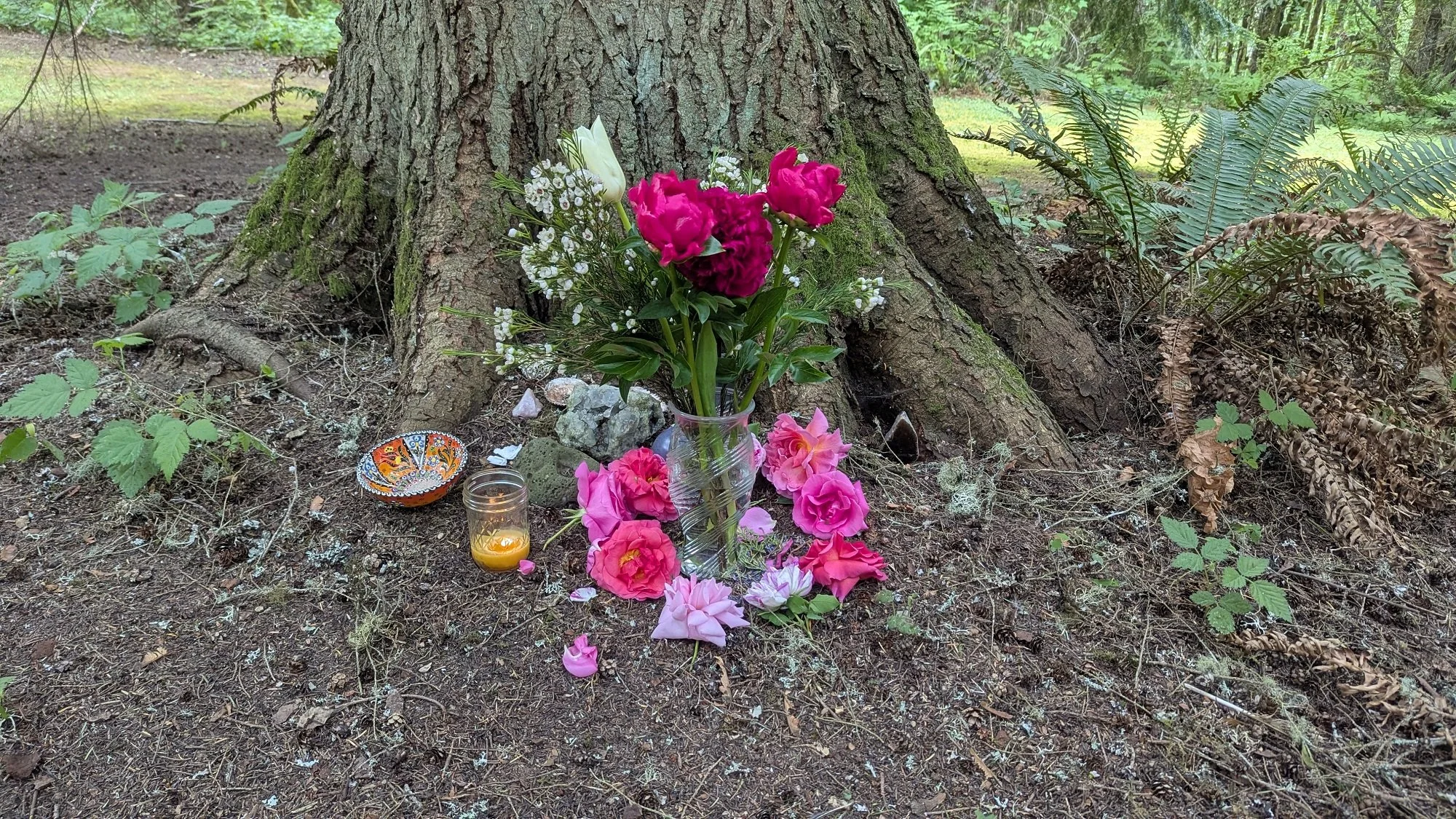
Traditionally, Beltane was celebrated with bonfires, dancing, flower crowns, and May poles — all symbols of the sacred union of the masculine and feminine principles, the Sun and the Earth, the God and the Goddess, coming together in symbolic marriage. In union, there is creation. There is the spark of new life. There is wholeness and emergence.

In Shamanic practice, Beltane is understood as a time when the veil between the worlds is thin in a particular way — not toward the ancestors and the dead, as at the tomb portal of Samhain, but toward the spirits of life, fertility, and the land itself. Beltane is the portal of the womb. The nature spirits are extraordinarily active and receptive at Beltane, and the Earth's creative frequencies are at their most generative and accessible.

Beltane and Abundance — What's the Connection?

In modern spiritual practice, abundance is often framed as a mindset or an intention. In Shamanic practice, abundance is understood as a living frequency — a quality of aliveness that moves through the Earth and through us, that can be aligned with, activated, and anchored through ritual and ceremony.

Beltane is one of the most powerful times of year to work with abundance, prosperity, and fertile creativity, because the Earth herself is broadcasting those frequencies at full amplitude. When we bring ourselves into alignment with what the Earth is already doing — through ceremony, through offering, through embodied ritual — we become conduits for that creative power rather than working against the current of the season.

This is why Shamanic Beltane ritual focuses not just on asking for abundance, but on becoming abundant — embodying the fertile creative power that is our birthright and our inheritance from the Earth.

I first started hosting Shamanic Beltane rituals where I live near Portland, Oregon because the land itself was asking to hold people in this ceremony. In the meditation where I received this instruction, I distinctly heard the words, “Bring people here to pray,” and I saw wildflowers rapidly growing and overflowing out of my cupped hands. Inviting people here to participate in the magic of Beltane through direct communion with the land has brought more than one participant to tears of gratitude for the beauty of life and generosity of the land.

What to Expect at a Shamanic Beltane Ritual

A Shamanic Beltane ritual is different from a meditation class or a workshop. It is a ceremony — a structured, intentional, energetically held gathering that works directly with the spirits of the land, the seasonal forces, and the participants' own life force and creative power.

In the Beltane rituals I host on sacred forested land near Portland, Oregon, we work with several elements:

Shamanic Teaching

Every ritual begins with teaching — grounding participants in the mythological, seasonal, and energetic context of Beltane so the ceremonial experience has roots. This is where we explore the meaning of sacred union, the nature of Beltane magic, and how to work consciously with the Earth's abundance frequencies.

Shamanic Ritual and Ceremony

The heart of the gathering is the ritual itself — a Shamanic ceremony that works directly with Earth magic, the spirit of the land, and the generative frequencies of Beltane. Participants are guided through the experience step by step. No prior experience with Shamanism is required.

Wildcrafting and Plant Medicine

One of the most beloved elements of my Beltane rituals is a wildcrafting elixir practice — making a personalized plant medicine from the land itself to take home and work with as you integrate your ritual experience. This is hands-on, sensory, and deeply connecting.

Land and Community

Time with the sacred forested land in the Columbia River Gorge is woven throughout. Forest bathing, reflection, tea, and community connection with fellow seekers are part of every gathering.

What People Say About Michelle's Beltane Ritual

Michelle is wonderful. She looks like a Celtic goddess and sings like one too 🌟. I attended her Beltane event at her home which was magical, mystical, and full of wonderment. Her back yard is enchanting with a beautiful forest and magnificent sculptures. I left the event feeling recharged creatively and spiritually 🤍 Thank you Michelle for creating and hosting this magical event ✨
— Karlene K. Portland, OR

Join Us This May 2 — Beltane Shamanic Abundance & Fertility Ritual

This year's Beltane ritual takes place on Saturday, May 2, 1–4pm on sacred forested land in Corbett, Oregon — just outside Portland, in the Columbia River Gorge. Sliding scale tickets $22–$50.

What Is Ready to Bloom Within You?

What fertile creative power is waiting to be activated and fully expressed? Beltane is the moment the Earth has been building toward since the first shoots of February. Come celebrate it on the land, in ceremony, in community.

View full event details and register on the Shamanic Events page →

Go Deeper — Shamanic Support for Your Journey

Beltane gatherings and Shamanic events are a beautiful entry point into this work. If you feel called to ongoing support — whether through individual healing sessions, 1:1 mentorship, or structured Shamanic training — I'd love to connect.

Or if you're not sure where to start: Book a consultation call and we'll find the right fit together.

What Is Energetic Mastery? The Shamanic Framework Every Healer Needs

What Is Energetic Mastery? The Shamanic Framework Every Healer Needs

Energetic mastery is one of the most essential — and most overlooked — foundations of Shamanic practice. Whether you are a healer, a bodyworker, a therapist, a lightworker, or simply someone navigating a spiritual awakening, your ability to work consciously and skillfully with energy determines everything: your safety, your effectiveness, your longevity in this work, and the depth of transformation you can hold for yourself and others. This is the framework I teach in the Foundations of Shamanism course, and in this article I'm going to walk you through exactly what it is and why it matters.

What "Energetic Mastery" Actually Means

Energetic mastery is not a mystical achievement reserved for advanced practitioners. It is a set of practical, learnable skills — tools you can develop through consistent practice — for working intelligently, confidently, and fluently with your own energy and with energy in the world.

Think of it as foundational fitness for your energy body.

No matter what sport an athlete plays, it helps to have a solid base level of physical fitness: strength, mobility, lung capacity, endurance, flexibility. All athletes have this foundational presence in the body, and then they specialize based on their particular path. A long-distance runner has different needs than a sprinter. But the base serves everyone.

Your energy body works the same way. The foundational skills of energetic mastery serve you whether you are doing Shamanic healing, mediumship, Reiki, somatic work, or simply trying to navigate the world without absorbing everyone else's energy.

When I began my studies in Shamanism and energy healing in 2003, the topic of energetic mastery and energetic hygiene was largely glossed over. I was told to use the power of intention and visualization, affirmations and invoking my guides for protection. While this instruction was partially helpful, I felt like there was something missing. I still felt depleted after giving intense Shamanic healing sessions, and despite my best intentions, I found myself susceptible to taking on other people’s energy in the world.

I knew there had to be more effective energetic hygiene protocols that would help me feel stable, secure and empowered in my energetic mastery. I eventually learned some of these practices from other teachers, and developed my own through my Shamanic healing practice. I noticed what practices were most effective and which made the biggest difference in my overall well-being. Based on this, I developed the Foundations of Energetic Mastery protocol that I now teach in my Shamanic courses.

Why Energetic Mastery Matters for Healers and Spiritual Practitioners

If you're in any kind of healer, helper, or caregiver role, the stakes are particularly high. You are constantly interfacing with other people's energy — their emotions, their wounds, their spiritual material. Without foundational energetic skills, that exposure accumulates. You end up carrying things that aren't yours. You are more susceptible to burnout. Your nervous system strains. You find yourself depleted after sessions that should feel energizing, or at least neutral.

Energetic Mastery for Shamanic Healing with Michelle Hawk

Energetic mastery gives you:

Safety. The principles of energetic hygiene I teach are the energy equivalent of washing your hands after a hospital visit. You would never hug people, shake hands, travel on an airplane, and never wash your hands. That's just a bad idea. Your energy body deserves the same intelligent care.

Better health and efficacy. When you know how to clear, ground, and maintain your field, everything in your practice works better. Your sessions are cleaner. Your intuition is clearer. Your channel is more open.

Increased power and capacity. These practices support your life force, your vitality, and your ability to hold very powerful energy without it spinning you out. You can do deep, potent work without burning through your resources — so you can show up in service in a way that is resourced, regulated, and confident.

The Pyramid of the Foundations of Energetic Mastery

I teach this framework as a pyramid, because the base makes everything else possible. Here are the six layers:

1. Consciousness Practices (the base) — developing your energetic fluency: the ability to sense, feel, project, and direct energy in your body, your personal field, and the space around you. This is the foundation of all other layers.

2. Clearing — clearing your body, your energy field, and your space. Essential before, during, and after any energy work.

3. Grounding — arriving in full presence. Connecting to the Earth and to your body so you can work from a stable, rooted place.

4. Centering — gathering all of your energy back to you. Reclaiming what has scattered, leaked, or been given away.

5. Cultivation — actively increasing your energy, your capacity, and your life force. Building the vessel so it can hold more.

6. Protection (the top) — the final seal. And here's what often surprises people.

Why Protection Comes Last

Many people who come to me for support with energetic hygiene are primarily concerned with energetic protection. They want to know how to shield themselves, how to keep negative energies out, how to stay safe in the spirit world. And I understand the concern — it feels urgent.

But protection is the last layer of the pyramid, not the first. And here's why.

Most of what we perceive as protection issues are actually cleared up by doing the other work first. If you were to learn protection techniques without doing the clearing, grounding, centering, and cultivation work first, you would still remain vulnerable in other ways. A shield over an uncleared field is like putting a clean coat over dirty clothes. You still need to do the laundry.

By the time you've done the foundational work — by the time your field is clear, you're grounded and centered, and you've cultivated your capacity — protection becomes almost a natural consequence. The cherry on top. It seals and completes what is already solid, rather than trying to compensate for what is missing.

I see this particularly in students and clients who have an activated channel or mediumship practice. While they may be very psychically open, they lack the foundational energetic architecture to remain stable and safe in their channeling experience. This often leads to overwhelm, unwelcome attention from spiritual forces, and even psychic attacks and entity attachments. These people come to me claiming that their shields don’t work, asking for better protection practices. Every single time, when I redirect them away from protection and towards the other foundations of energetic mastery, they notice a huge difference and feel much safer and more stable in their channeling experience.

The Two Modes: Daily Practice and Spot Treatment

Every practice in this framework has two versions.

Daily practice is your training — your energetic fitness maintenance. Like going to the gym or to yoga class, not because anything is acutely wrong, but because consistent practice builds strength, capacity, and fluency over time.

Spot treatment is for acute situations. You just got out of a really draining meeting. You worked with a difficult client. You went somewhere energetically heavy and you can feel it in your field. Spot treatment is how you reset, clear, and return to yourself in real time.

Knowing both versions of each practice — and knowing when to use which one — is itself an important skill.

Energetic Mastery Is a Learnable Skill

There's a misconception in the world of energy work that some people can just do this naturally and others can't. I really don't believe that's true, and it's not what I've observed in years of teaching.

Yes, some people grew up in environments that were conducive to energetic sensitivity, and they may have a head start. But that doesn't mean someone who grew up in a more shut-down or discouraged environment can't develop these skills and become genuinely confident in them through practice.

Just like Michael Phelps has a physiology that naturally inclines him toward excellence in swimming — and he is exceptional — someone without that physiology can also excel through dedicated training. The body learns. The energy body learns too.

These are skills. These are muscles. They develop with use.

Ready to Build Your Foundation?

The Foundations of Energetic Mastery is woven throughout the entire Foundations of Shamanism course — it's not a single module, it's a thread that runs through all eleven weeks of the program because it underlies everything else we do.

If you're already on a Shamanic path and want personalized support building these foundations, 1:1 Shamanic Mentorship may be the right next step.

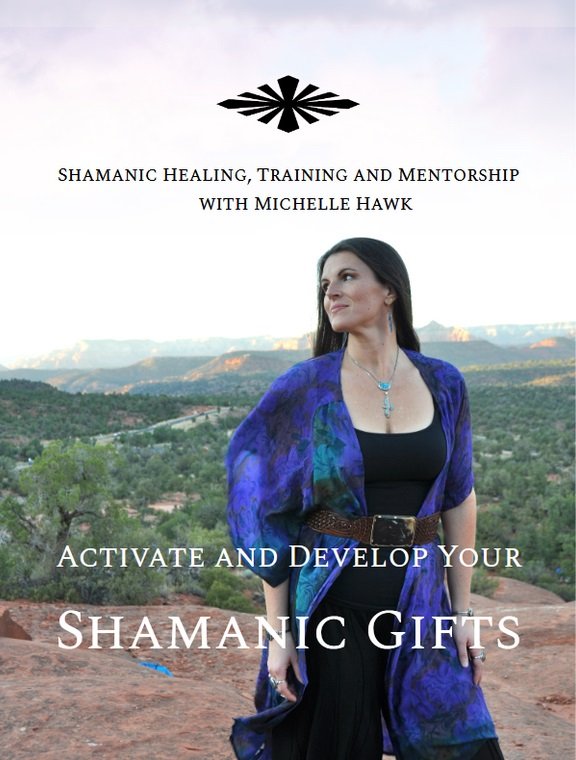
Not ready to dive in yet? Start with the free guide, Activate Your Shamanic Gifts — a beautiful first step into conscious, grounded Shamanic practice.

Ethical Shamanic Practice: The Three Core Principles of Working with the Spirit World

Ethical Shamanic Practice: The Three Core Principles of Working with the Spirit World

Ethical Shamanic practice is built on relationship — not technique. And like any healthy relationship, it requires certain qualities to thrive. Over years of practice and teaching, I've distilled these qualities into three core principles I call the Three C's: Context, Consent, and Collaboration. These aren't rules imposed from outside. They are the natural expression of genuine, respectful relationship with the living world — with the land, the spirit realm, and all the beings we work alongside in Shamanic practice.

My Introduction to Context, Consent and Collaboration in Shamanic Practice

When I was in second grade, my school went on a trip to the high desert in central Oregon. At that point in my life, visiting a different bioregion was a huge revelation to me. I was accustomed to the towering firs, waterfalls and cascading moss of the pacific northwest rainforest. Encountering such a distinct environment with a completely different architecture of climate, geology, and inhabitants opened my eyes to new awe for the genius of nature. As we learned about life in the desert, I felt the tremendous importance of understanding the constellation of beings, elements and land, and how they all work together in a way that is specific and ideal to that particular place.

That moment planted the seeds of what would later become the three principles I now teach as the foundation of all Shamanic practice: Context, Consent and Collaboration. For the first time, I clearly realized the significance of this dynamic in nature. Later in my teenage years, these ideas took on more structure and definition as I began my Shamanic study and learned practices from my teachers about how to make offerings and communicate with land and nature spirits, and bring these principles into Shamanic healing sessions.

Let’s explore the Three C’s of Shamanic practice and how they can help you deepen your relationship with nature and the spirit realm.

Context: Know Where You Are

Context is the first and most foundational C. In Shamanic practice, context means understanding the existing architecture of wherever you are. What land are you on? Who are the indigenous peoples or original stewards of this place? What are the common plants, animals, and salient geological features? What is the history of this land — its transformation, its grief, its gifts? Who are the spirit guides who work with these frequencies and come from this place?

Context also encompasses the cultural lineage you are working within. Are you drawing on a specific tradition? A specific teacher? A specific geography? The more clearly you understand your context — both the land context and the lineage context — the more effectively and respectfully you can work.

Practically, this means: wherever you are, take time to learn about the place. Research the bioregion. Learn the plants and animals, and their relationships with each other. Research the history. Acknowledge the peoples who have stewarded this land before you. This is not only ethically important — it also makes your practice more powerful, because you are working in alignment with the actual living intelligence and existing architecture of the place rather than imposing something onto it. This is foundational to a practice of ethical Shamanism — there is no true relationship without understanding.

Consent: Ask Before You Act

Ethical Shamanism Michelle Hawk Portland Oregon

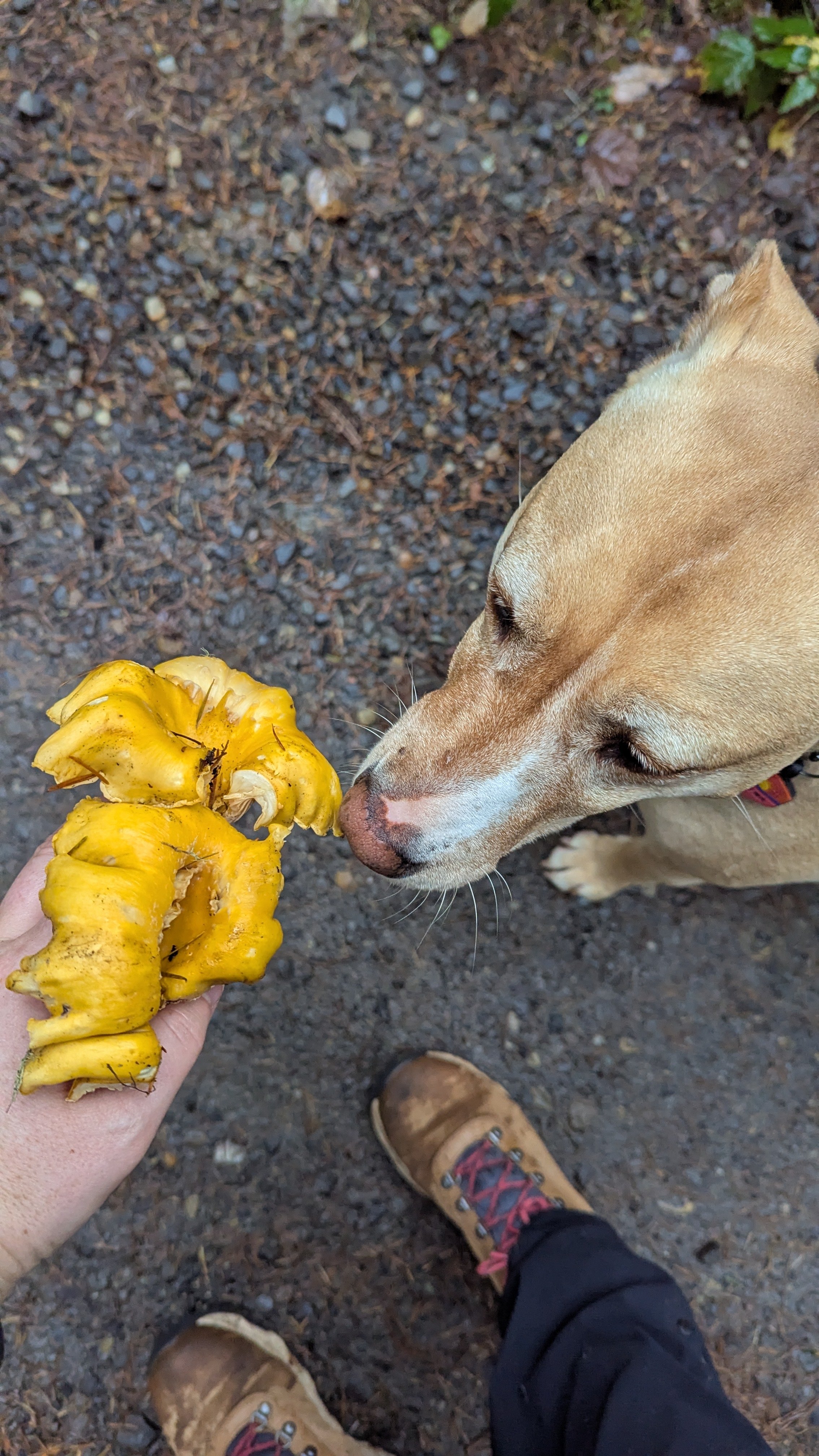
Asking for and receiving consent to harvest Chanterelle mushrooms.

Earth is a free will planet. This is one of the fundamental principles of Shamanic cosmology. Nothing can be compelled. Nothing should be compelled. Everything we do in relationship with the spirit world, with land and nature spirits, with the beings we work alongside — all of it happens in the context of consent. In an animistic worldview, consent isn’t just a courtesy — it's a recognition that everything around us is genuinely alive and sovereign.

This means asking before you take anything from nature — a mushroom, a branch, a stone, a handful of herbs. It means asking the land or the space before you do ceremony, Shamanic healing work, or any kind of energetic practice. It means listening for the response, which may come as a felt sense of openness or resistance, as a sound, as an image, as a physical sensation or physical messenger. The principle of asking and attuning before acting is at the heart of what I mean by ethical Shamanism.

What does it feel like when consent isn’t present? I clearly remember an experience several years ago where I was walking through the forest, looking for a space to do some Qigong and Shamanic ritual practice. I came across a spot that visually looked beautiful and appealing. When I opened my senses to ask if I was welcome to practice there, I felt incredibly uneasy. All of a sudden, the birds all went quiet, and I felt prickling on the back of my neck. I acknowledged the refusal and kept walking. As soon as I left the space, the birds resumed singing and the sensation faded. I kept walking until I came across another space that answered my request with warmth, welcome and a feather on the ground.

Collaboration: You Are Never Alone

The third C is perhaps the most liberating: you are never doing this alone. Shamanic practice is always collaborative. You are working alongside your spirit guides, your lineage teachers, the land spirits of wherever you are, the medicine spirits of the plants and elements, your own higher self. All of these are available to you as partners, allies and collaborators.

The shift from ‘I am doing this’ to ‘we are doing this together’ is transformative. When you’re holding space for someone in a Shamanic healing session or ritual, you don’t need to carry it all yourself. When you’re navigating something difficult in your own life, you don’t need to navigate it alone. When you’re facilitating a group or a retreat, you can invite the land itself to hold the container with you.

Collaboration requires the skill of asking, the willingness to receive and the reciprocal flow of energy through offering back. All of these are practices, and like all practices, they deepen with time, attention and devotion.

Putting the Three C’s Into Practice

As you are building your own Shamanic practice, here is a simple way to bring all three C’s into any Shamanic work or ceremony.

  1. Before you begin, take a moment to orient to Context: where am I? What is the living architecture of this place? What do I need to understand about these beings and this environment?

  2. Then move to Consent: I am asking permission to be here in this way. I am listening for the response and waiting for a full yes.

  3. Finally, open to Collaboration: I am not doing this alone. I am working with my guides, with the land spirits, with all the beings who choose to support this work for the highest and greatest good. May my practice be a devotional gift of reciprocal generosity.

This three-part orientation takes only a few minutes and it fundamentally changes the quality of everything you do. It moves you from performing a technique to being in genuine relationship. That difference is everything.

Ready to Deepen Your Shamanic Practice?

The Three C's — Context, Consent and Collaboration — are woven through everything I teach, from individual healing sessions to long-term mentorship to the Foundations of Shamanism course. They're not just principles to read about. They're skills that develop through practice, guidance and genuine relationship with the living world.

If you're ready to build an ethical Shamanic practice rooted in integrity, here's where to go next:

Foundations of Shamanism — my 11-week live online course covering the essential skills of ethical, grounded Shamanic practice.

Shamanic Mentorship — 1:1 support for your unique path of healing and awakening.

Shamanic Healing — powerful sessions for deep personal healing work.

Not ready to commit yet? Start with my free guide, Activate Your Shamanic Gifts, and begin building your own relationship with the living world.

Land and Nature Spirits: What They Are and How to Work With Them

Land and Nature Spirits: What They Are and How to Work With Them

Working with land and nature spirits in Shamanic practice are among the oldest and most fundamental spiritual relationships. In animistic traditions worldwide, the natural world is understood to be alive — not just biologically, but spiritually. Every tree, stone, watershed and animal carries both a physical and an etheric presence, available to us as ally, teacher and guide. I've been in relationship with land and nature spirits since childhood, long before I had words for what I was experiencing.

How I First Encountered Land and Nature Spirits

When I was growing up, my favorite tree was a massive Big-Leaf Maple along a hiking trail in the forest near my house. I met this tree for the first time on a class field trip hike when I was 8 or 9, and then returned regularly to hike with my family. Every time I passed, I would stop to say hello to the tree, give it a hug, and stand in awe at its towering elegance.

Land and Nature Spirits in Shamanism Michelle Hawk

Later, as a teenager developing my Shamanic practice, I started to make offerings to the tree. I would bring little crystals, share some water, and offer a prayer of gratitude. The energy of this tree was so grounded, calm and expansive, and I immediately felt a sense of peace and connection whenever I visited. As I continued my study of Shamanism and learned more about land and nature spirits, I came to understand that this special being was a Guardian Tree of the local ecosystem – a powerful nature spirit who helps to anchor and protect the etheric grid of the area.

Since then, I have had the honor of meeting and working with many other Guardian Trees. The land where I live now is home to a massive Hemlock who serves as a temple keeper of this area. She has anchored the prayers, ceremonies and offerings of me, my partner, and countless students and clients.

In Shamanic practice, we don’t work alone. We are always working in relationship — with the Earth, with the beings who inhabit her, and with the animating forces that move through the physical and non-physical world alike. Land and nature spirits are at the heart of this relationship. They are among our most important allies, our most consistent teachers, and often our most overlooked resources. (Read also: What Is Animism? The Ancient Worldview at the Root of Shamanism.)

What Are Land and Nature Spirits?

Land and nature spirits are the individual and collective animating forces that correspond to animals, plants, stones, elements, and geological features. They have both an embodied and an etheric dimension. The Hemlock tree in my yard has a physical body, and also a spiritual body, a consciousness, a medicine.

Some land and nature spirits have a physical presence on Earth right now. Some exist primarily in the etheric realm or in myth. Dragons are very real — just not presently embodied in the way a sparrow or a cedar tree is. Unicorns, pegasi, and griffins exist in different traditions and in the collective mythological consciousness of humanity, even without physical form.

The I, the We, and the All

When working with land and nature spirits in Shamanism, I find it helpful to think in three layers. Take the Guardian Hemlock tree on the land where I live. She is the I — one individual Hemlock with her own personality, her own medicine, her own energetic signature. She is also part of the We — the Hemlock tribe, the forest community, all connected through root systems, chemical signaling, and the mycorrhizal network. And she is part of the All — the tree nation, the Standing Nation, the collective consciousness of all trees everywhere.

When you begin working with a particular coyote who visits your yard — playful, tricky, laughing at you — you’re meeting the I. When you encounter coyote as a collective frequency, as a medicine, as an archetype of the trickster, you’re meeting the We or the All. Both are real. Both are available to you.

Why These Relationships Matter

Imagine holding space for a Shamanic healing session, a retreat, or even a difficult conversation. If your personal energy field is carrying the entire weight of that container, it’s exhausting. But when you’re working in collaboration with the land spirits of where you are — the guardian trees, the local watershed, the particular mountains and stones — you’re not doing it alone. The land itself becomes a co-facilitator. It helps ground the container, process and compost released energy, and hold the field with stability and care.

Land spirits are particularly excellent co-facilitators for grounding and stabilizing a container, protection and clearing, composting released energy, and ensuring your Shamanic work moves in alignment with the existing flow of the place.

Start Local

One of the most important principles in building relationships with land and nature spirits is this: start with where you are. Not the most glamorous tradition or sacred sites you’ve read about. Not the most powerful-sounding beings from somewhere far away. The land where you currently live.

Your animal body is literally made of the land where you live — the water you drink, the air you breathe, the foods grown in local soil. Your body is attuned to the frequencies, the medicine, the particular climate and mineral composition of your place. Some of your most powerful, supportive, and intimate relationships will be with your local land and nature spirits, because that is home.

Land and Nature Spirits in Shamanic Practice Michelle Hawk

I often assign my Shamanic mentorship clients the following daily practice, which I also recommend to you: Go outside every day and visit the same tree, rock, water feature or plant (even a humble dandelion growing through a crack in the sidewalk). Make an offering, then wait and notice what you notice. Over time, you will begin to develop a deeper relationship with that being.

How to Begin

You don’t need a formal ceremony or specialized training to begin building relationships with the land and nature spirits where you live. You need presence, attention, and respect. Start by going outside without an agenda. Walk. Notice what draws your attention. Which tree do you keep walking past but never stop for? Which bird keeps showing up? Begin there. The animals that appear repeatedly — what Shamanic practitioners often call power animals — are frequently nature spirit relationships trying to make themselves known. Ask before you take anything from nature. Learn the names — both common and scientific — of the plants and animals where you live. Research who lived on this land before you. The more you know about the context of where you are, the richer your relationships with its spirits will become.

Ready to Go Deeper with Land and Nature Spirits?

Working with land and nature spirits is one of the most grounding and transformative skills you can develop as a Shamanic practitioner — and it's a central thread woven throughout the entire Foundations of Shamanism course.

Not ready for the full course yet? Start with my free guide, Activate Your Shamanic Gifts (below) — a beautiful first step into your own Shamanic practice.

And if you're looking for personal support navigating your relationship with the spirit world, Shamanic Mentorship may be exactly what you need.

What Is Animism? The Ancient Worldview at the Root of Shamanism

What Is Animism? The Ancient Worldview at the Root of Shamanism

As a kid, I always loved animals, nature and magic. All of my favorite books featured talking animals, young people learning to live harmoniously with nature, and discovering magical powers from that connection. When I read stories about sorceresses healing people with magic, I started practicing "healing spells" on my diabetic dog. I talked with the trees and listened intently to their replies. I learned the personalities of the stones in my backyard.

I didn’t have the words for it at the time, but I later discovered that my childhood worldview was not just my imagination or wishful thinking, but was instead an ancient and fundamental philosophy common to people all over the Earth for thousands of years. And this worldview is known as animism. It is a worldview older than any religion, deeper than any tradition, and more intrinsic than most people realize.

Before there were temples, before there were texts, before there were organized religions, there was animism: the belief that everything is alive. That the tree outside your window has presence. That water has memory and the rivers sing songs of what they have seen. That the mountain watches. This is not mythology. This is the original worldview of people everywhere on Earth, and it is the foundation upon which all Shamanic practice stands.

What Is Animism, Exactly?

Animism is the belief that all things are alive and that all things are connected through a shared web of consciousness. The word itself comes from the Latin anima — the immaterial force that animates form. In animistic understanding, that animating force is not confined to living creatures as science defines them. Stones have anima. Mountains have anima. The elements — fire, water, air, earth — have anima. Nothing is truly inert.

What is Animism Michelle Hawk connecting with nature

You Already Know This

Most of us have already experienced animism, even if we didn’t have the word for it or consciously recognize it at the time. If you’ve ever felt someone’s energy or a presence leave their body at the moment of death, you have felt anima. There is a visceral, unmistakable difference between a body with life in it and a body without. That difference is anima.

If you grew up loving folk tales where animals could speak and trees had personalities and the forest was a living, breathing character, you were responding to animistic storytelling, the oldest form of human story. That sense of everything being alive, everything mattering, everything in relationship — that is animism, and it is your birthright.

Animism Is the Original Human Worldview

Anthropologists have documented some version of animistic belief in every human culture that has ever existed. It is not a tradition that belongs to any one people or any one part of the world. It is the baseline orientation of human beings on Earth. The concept of deities (such as the queen of the ocean, the god of the storm, the spirit of the forest) arose from animism. Before gods were personified, they were forces. Forces of nature. Forces of life. That recognition of aliveness in all things is where religion began.

Non-animistic worldviews are extremely recent in human history. A few thousand years may feel like a long time, but on the scale of human existence on Earth, it is a small blip. The majority of human experience, as seen in the cave paintings, the harvest rituals, the medicine songs, the offerings left at rivers and trees and stones — all of it was animistic.

How Animism Relates to Shamanic Practice

Shamanism is an animistic practice. You cannot separate the two. Shamanic practice is built on the recognition that all things are alive and in relationship with each other, and that we, as humans, have both the capacity and the responsibility to be in conscious, respectful, collaborative relationship with the living world around us.

This is why Shamanic practice involves working with land and nature spirits, communicating with the spirit realm, and developing a personal relationship with the specific plants, animals, elements, and beings of the land where you live. Because if everything is alive, then everything is available as teacher, healer, guide, and ally.

Why Animism Matters Now

We live in a world of profound disconnection — from nature, from community, from our own bodies. Many people feel a deep, unnamed homesickness, like a longing they can’t quite locate or name. Animism offers a frame for understanding that longing: it is the longing to return to relationship. To belong again to the living world. To stop being a witness to nature and become a participant in it.

Shamanic practice is one path back. Not as a regression to some idealized past, but as a reclamation of something ancient and fundamental that has always been available to us. You belong to Life, and Life loves you. And the web of aliveness that animism describes has always been there, waiting for you to remember it.

nimistic earth-based spirituality — the belief that all things are alive as taught by Shaman Michelle Hawk

Beginning Your Animistic Practice

You don’t need a ceremony, a teacher, or a lineage to begin developing an animistic relationship with the world around you. You need attention. The simplest practice is this: go outside. Leave your headphones at home. Walk without a destination. Notice what you notice. A bird that holds your gaze. A tree your hand moves toward. A stone that catches the light in a particular way. These are invitations. This is animism beginning to come alive for you.

Ready to go deeper? Download my free guide, Activate Your Shamanic Gifts (below), to begin exploring your own connection to the living world. Or if you’re ready to commit to a structured path of practice, learn more about the Foundations of Shamanism course here.