Shamanic offerings are one of the most ancient, most universal, and most misunderstood practices in Earth-based spirituality. In virtually every indigenous culture that has ever existed, humans have made offerings to the living world — to land and nature spirits, to ancestors, to the elements, to the forces that sustain life. And yet in modern Western practice, offerings are often either ignored entirely or reduced to a vague sense of 'leaving something nice outside.' Here is a complete guide to Shamanic offerings: what they are, why they matter, the three types every practitioner should know, when to make them, what to offer, and how to do it in a way that is genuine, appropriate, and deeply nourishing for both you and the spirits you are in relationship with.
Why Make Offerings? The Deeper Purpose
Before getting into the practical how-to, it's worth sitting with the deeper question: why do we make offerings at all?
The short answer is this: Shamanic practice is a relationship. (Read also: Ethical Shamanic Practice: The Three Core Principles of Working With the Spirit World.) And like any healthy relationship, it requires tending. It requires showing up not only when you need something, but simply because you value the connection.
There is a tendency in modern culture — and in modern spiritual culture too — toward what I would call extractive or consumptive engagement. We arrive when we want something. We ask, receive, and move on. We may not think much about how we are showing up as an experience for the beings we are working with.
Offerings are how we shift out of that extractive mode and into devotion. They are how we practice being generous rather than merely consuming. They open the bridge of communication. They build the relationship over time. And they are one of the most concrete, embodied ways to practice being in right relation with the Earth.
I intuitively started making offerings as a teenager, very early in my spiritual practice. On one of the hikes I frequented growing up, there was a towering maple tree where I would always stop and usually leave something — an interesting rock or a feather I had found. Whenever I visited the tree, it felt like checking in with a friend.
Years later, when my dog passed away and I was meditating on where to leave her remains, that tree immediately surfaced in my consciousness. My dog had visited that tree with me hundreds of times over her life, and it felt like a safe and welcoming place to entrust her ashes. When I arrived at the tree, I felt overcome with a sense of comfort and enveloping warmth. I knew the tree was telling me that she would hold my dog’s remains and support her body in fully returning to the Earth. I felt humble gratitude for the tremendous care.
The Three Types of Shamanic Offerings
Not all offerings are the same. Understanding the three types allows you to be intentional about what you are doing and why.
1. Gratitude Offerings
Gratitude offerings are exactly what they sound like: offerings made in appreciation, acknowledgment, and love. Their primary function is to support your personal connection with a spirit, a place, or an ancestor. They are how you say: I see you. I appreciate you. I am grateful you are here. Thank you for existing.
Gratitude offerings require no specific request or agenda. They are given purely in the spirit of appreciation and reciprocal generosity. This is the offering you make when you pass your favorite tree and feel the impulse to leave something. It is the prayer you offer to the land when you arrive somewhere beautiful. It is the song you sing to the river for no reason other than joy.
2. Votive Offerings
You may recognize the word 'votive' from votive candles — those small candles you light to make prayers and requests. A votive offering is a specific and personal appeal for support, healing, information, or guidance. Votive offerings can be made on behalf of yourself, on behalf of someone else, or on behalf of a collective. They can be requests for healing, for clarity, for protection, for support with a decision, for guidance on a particular path.
Important: every votive offering also includes gratitude. We always begin with appreciation before we ask for anything.
3. Feasting Offerings
Feasting offerings are transpersonal — they are not for us. They are given with no personal agenda, no request, nothing to do with our individual needs or desires.
Feasting offerings are a directing of aliveness — giving life force to the Earth, to ley lines, to sacred sites, to the collective field, to the holy days, to the gods and spirits working in the wider world. This is the most mature form of offering, and it corresponds with what could be called high magic: working not for personal gain but for the benefit of the whole.
Most practitioners begin with gratitude and votive offerings, and develop their relationship with feasting offerings over time as their spiritual practice matures.
When to Make Offerings
There is no wrong time to make an offering. But here are the moments when offerings are especially meaningful and powerful:
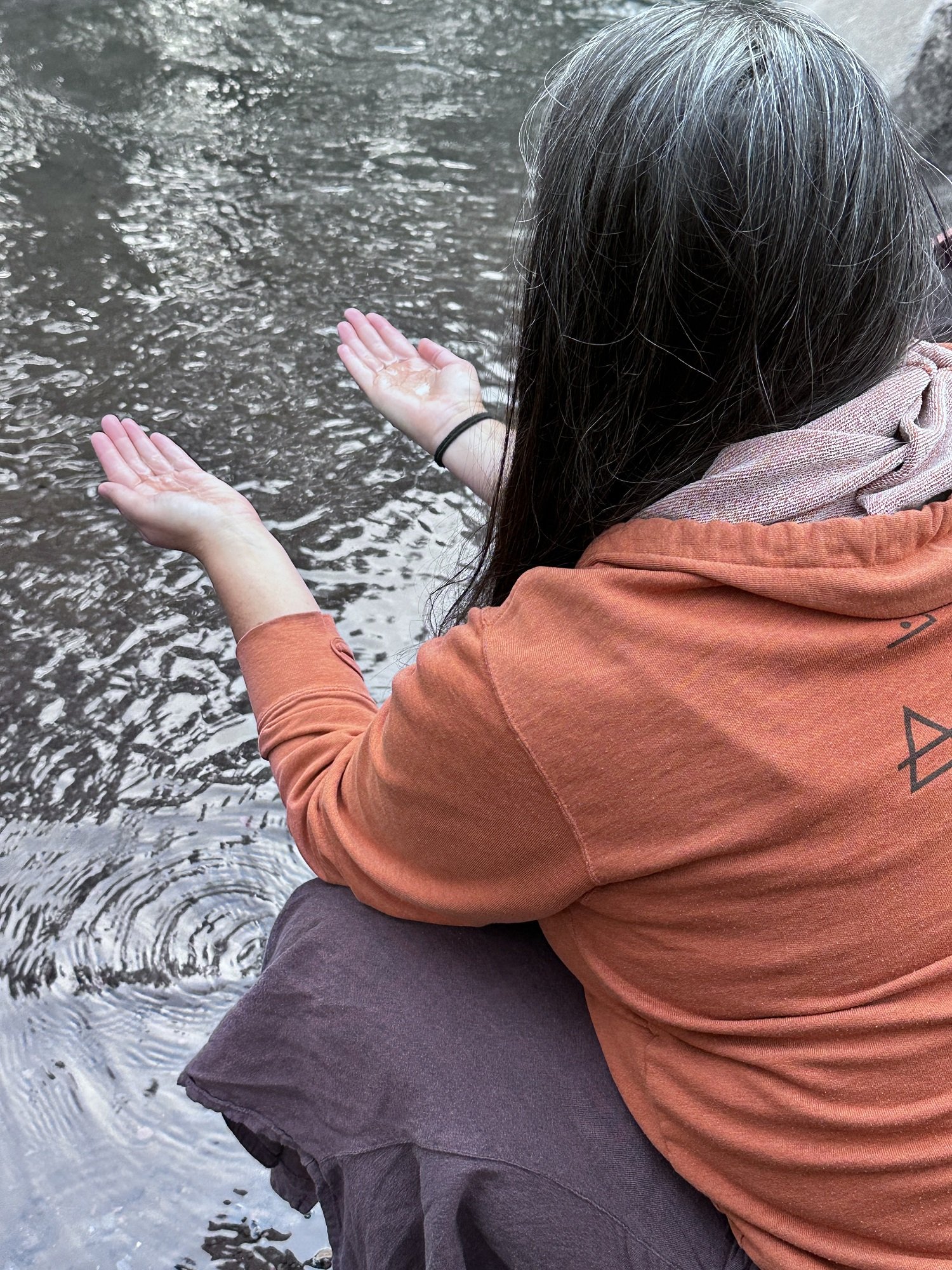
When visiting a new place or land — to introduce yourself, express gratitude, and ask permission. (Read also: Land and Nature Spirits: What They Are and How to Work With Them.)
When moving to a new home or land — ideally before you sign a lease or close a deal, to ensure the spirits of the land welcome you
When anchoring or requesting support for events, healing containers, or sacred spaces
For personal healing processes — when you are asking for support through a significant transformation
In connection with a spirit ally — before and after journey practice, at your altar
For the holy days and feast days of the wheel of the year, or within specific spiritual traditions you work with
Spontaneously in nature — when you feel moved, you don't need a formal reason
When foraging or harvesting from nature — always ask permission before taking
When releasing difficult emotions or dense energy — asking the Earth to receive and compost what you are releasing
What to Offer: Material and Immaterial Offerings
The most important thing to know about what to offer is this: your attention, your aliveness, and your care are your most powerful magical currency. When you give these genuinely, in whatever form, the communication is real.
That said, there are many wonderful things you can offer:
Material offerings:
Items gathered from nature — flowers, leaves, seeds, stones
Bioform offerings — hair, saliva, blood; these create a greater degree of intimacy, as they connect the waters or substance of your body with the spirit you are offering to
Food and drink — honey, water, cornmeal, fruits
Items you have prepared or crafted — prayer bundles, little cakes, handmade objects
Crystals, essential oils
Immaterial offerings:
Songs, prayers, poems, stories, sound and music
Energy work or meditation directed toward a spirit or place
A conversation — simply speaking your appreciation and prayers aloud
Your presence — sitting with, witnessing, attending
Practical notes for outdoor offerings:
Everything left outside must be biodegradable, eco-friendly, and non-toxic to wildlife
Unwrap any wrapped items before placing them outside
Avoid synthetic ribbons or materials — use raffia or hemp cord
Offerings never go in the garbage when they are complete — always outside or in fire for composting or to release the energy
Make offerings appropriate to the specific spirit and your prayers. Wolf appreciates different things than Deer. An offering for clearing and releasing has a different energy than an offering for abundance and well-being.
A Simple Offering Practice to Try Today
You do not need a formal altar, a specific tradition, or elaborate ceremony to begin making offerings. Here is a practice you can do right now, with what you have. I teach this and other practices for making offerings in the Foundations of Shamanism course.
Choose a plant in your home or garden. Fill a glass of water and hold it in your hands. Close your eyes and breathe. Call your love, care, and gratitude for this plant into the water. Let whatever you especially appreciate about this plant be present in your hands and in your prayers.
Water the plant with this offering. Then sit quietly with the plant for a few minutes. Notice what you notice — in your subtle body, in the quality of the air, in the feeling of the room. This is spirit communication. This is how the relationship begins.
During a previous cohort of the Foundations of Shamanism course, one student reported making offerings and receiving an immediate response: “I called in the Circle of Seven and made offerings this morning at my sit spot and a great horned owl came and sang to me right after I finished and was sitting in meditation! What a treat!”
The Devotion Principle: Generosity, Not Extraction
I will close with something that I think is the heart of all of this: offerings are a practice of devotion, and devotion is a practice of showing up generously over time.
Think of a person in your life who only ever calls when they're in crisis — when they need something, when they're overwhelmed, when they want you to fix something. Eventually, when their name comes up, you brace a little. The relationship feels depleting.
Our relationships with the Earth and the spirit realm are no different. If we only show up asking for things, the relationship remains surface-level. We are children of Earth and she will always take care of us in unflinching generosity. But when we tend these relationships with genuine appreciation, with regular offerings, with songs and prayers and presence for their own sake — the relationship deepens. The communication becomes richer. The collaboration becomes more powerful and mature.
Earth and the spirit realm are extraordinarily generous. Our work is to be worthy of that generosity by showing up in kind, and to evolve past a child-like relationship of only receiving into a mature relationship of collaboration and reciprocity.
Go Deeper — Shamanic Support for Your Journey
Making Shamanic offerings is one of many skills developed in the Foundations of Shamanism course — my 11-week live online Shamanic training program. We develop practices like the ones described here, and build systematically toward Shamanic journeying, cultivating spirit guide communication, healing work, and more. Join the wait list and be the first to know when registration opens this fall!
More ways to receive support:
→ Shamanic Healing sessions — for deep personal healing work.
→ 1:1 Shamanic Mentorship — for sustained spiritual development and guidance.
→ Foundations of Shamanism course — my 11-week live online Shamanic training program.
Or if you're not sure where to start: Book a consultation call and we'll find the right fit together.