Energetic Mastery

How to Develop Your Shamanic Senses: A Guide to Sensing, Feeling, Projecting and Directing Energy

How to Develop Your Shamanic Senses: A Guide to Sensing, Feeling, Projecting and Directing Energy

One of the most common questions I receive from people beginning a Shamanic practice is some version of: "How do I know if what I'm experiencing is real, or if I'm just making it up?" It's a beautiful question, and it points to something essential about Shamanic development — the cultivation of energetic fluency. In Shamanic practice, your ability to consciously sense, feel, project, and direct energy is not a mysterious gift that some people have and others don't. It's a skill. And like any skill, it develops through practice. In this article I'm going to walk you through exactly what these skills are, how they work, and how to begin developing them.

The Two Core Skills of Shamanic Consciousness Practice

At the foundation of all Shamanic energy work are two core capacities:

Sensing and feeling — the ability to perceive, receive, and notice energy: in your body, in your field, in the space around you, and in others. This is the receptive, listening side of energetic work.

Projecting and directing — the ability to move, transfer, and guide energy with intentional awareness. This is the active, expressive side of energetic work.

Every Shamanic practice draws on both of these. When you are Shamanic journeying to connect with a spirit guide, you are sensing and feeling — receiving information, images, sensations, and messages. You are also projecting — sending your consciousness into the spirit realm and directing your intention toward what you are seeking.

When you are working as a Shamanic healer with a client, you are sensing and feeling their energy field — perceiving blockages, intrusions, soul loss, and areas of depletion. And you are directing — inviting healing forces into their field, guiding energy to move, directing extraction work.

The two skills work together. Both are learnable and can be developed with practice, and the help of validation.

During my very first Shamanic training in 2003, I swallowed my initial anxiety (would I be able to do this? Is this real?) and dove right into trust and surrender of what I was sensing. We practiced Shamanic journeying in pairs, and when I shared with my partner what I had sensed and felt on her behalf, she quickly validated everything I had perceived as extremely accurate, helpful and relevant for her. I felt relieved to have many experiences like this early in my practice, that allowed me to build trust and confidence in my ability to accurately perceive energy. This helped me build a strong foundation for my growing Shamanic healing work and allowed me to consciously develop my skills.

"Am I Making This Up?" — The Question Every Beginner Asks

Let me speak directly to the doubt that most beginners carry.

When you extend your awareness into a space, into a body, or into the spirit realm, and you notice something — a sensation, an image, a feeling, a knowing — a part of your mind will immediately ask: "Is that real, or am I imagining it?"

Here is what I want you to know: the imaginal intelligence is real intelligence. The faculty of imagination is not the opposite of perception — it's a type of perception. The Shamanic realms and the beings who inhabit them communicate through exactly this channel: images, feelings, sensations, symbols, knowing.

When I first began my Shamanic practice in 2003, I felt the same concern I hear from many of my students — “how do I know I’m not just making things up?” But when I asked my teachers about it, they all encouraged me to embrace what I perceived as my imagination. From the Shamanic perspective, imagination is a valid sensory intelligence that allows the practitioner to transcend beyond ordinary reality into subtle realms of perception and collaboration with spiritual forces.

The way you develop trust in your perception is not by waiting to be sure before you act on it. It's by practicing, noticing, journaling, and tracking what happens over time. You begin to build a body of experience that tells you: yes, when I sense something in that particular way, it tends to be accurate.

This is why consciousness practices — the exercises for sensing and feeling, and projecting and directing — are so important. They build the muscle. They make the channel clearer, more consistent, and more trustworthy over time.

Three Exercises I Teach in the Foundations of Shamanism

Here are three consciousness practices I teach in the Foundations of Shamanism course to help students develop energetic fluency and confidence. You can begin working with them on your own.

Exercise 1: Sensing and Feeling in Space

Sit comfortably with your eyes closed and your hands resting palm up on your legs. Take a few deep breaths to arrive fully present.

Shamanic Sensing Energy Michelle Hawk

Front and behind: Extend your attention to the space in front of your body. Feel it. Notice any objects there, and then feel beyond them — all the way to the wall in front of you, and maybe beyond. Then shift your attention to the space behind your body. Do the same. Then extend in both directions simultaneously. Notice whether one direction is easier than the other.

Sides, above, below: Repeat this process for the space to your right, your left, above your head, and below your feet. Then both sides simultaneously, both above and below simultaneously, and finally, all directions at once — 360 degrees around you in a sphere.

The expansion-contraction breath: On your inhale, draw all of your awareness as deep inside yourself as possible — compressed like a tiny, dense marble of light. On your exhale, expand your awareness out in every direction simultaneously, as far as you can. Repeat several times.

What this develops: Multi-directional awareness. The ability to sense and feel what is all around you simultaneously. In Shamanic journeying and healing work, this translates to the capacity to hold attention in multiple directions, dimensions, and relationships at once — what I call energetic bilocation and multilocation. This practice also supports the foundation of intentionally directing your energy through expansion and contraction. This direction can later be refined.

Exercise 2: The Layers of the Body

This is a practice in sensing and feeling into the interior of your own energy body.

Choose one hand. Bring your attention to it completely. Then move your awareness through the layers, one at a time, from outside in:

  • The skin — feel the air on your skin, the warmth, the texture

  • The muscles — feel their warmth and strength

  • The blood — feel the current, maybe feel your heartbeat in your thumb

  • The bones — feel the crystalline, mineral structure

  • The marrow — that spongy tissue where new blood is born

  • The light at the core of the marrow — your starseed consciousness

Then hold all layers simultaneously. Then transfer that full awareness to your other hand. Then jump back to the first. Then both hands simultaneously. Then slowly expand that whole-body awareness through your wrists, arms, shoulders, neck, head, chest, abdomen, hips, and all the way down to the tips of your toes.

What this develops: Precision of attention, depth of sensing, and the ability to project and direct awareness with intention. The "jumping" is projecting. The holding of all layers simultaneously is an advanced form of perceptual multilocation.

Exercise 3: The Tiny Self

This is a practice in deliberate perspective-shifting and Shamanic bilocation.

Project a tiny version of yourself — perhaps an inch tall — to stand in the palm of one hand. Then enter the perspective of that tiny self. Feel the squishy palm beneath your feet. Wrap your tiny arms around a finger like a tree trunk. Look up and see your full-size face above you.

Then jump your awareness back to your full-size self, looking down. Then back to the tiny self. Then jump your tiny self to your other hand. Then hold both perspectives simultaneously — the tiny self looking up, and the full-size self looking down — at the same time.

What this develops: Deliberate bilocation. The ability to project consciousness to another location and perceive from there. This is directly related to the kind of consciousness we work with in Shamanic journeying, soul retrieval, and healing work with clients — where we are simultaneously present in ordinary reality and in the spirit realm.

Over the years, I have found that students tend to already feel comfortable with one area of these exercises, and deeply challenged by others. Students who have an existing meditation or embodiment practice often feel very confident sensing the layers of the body, or the space around them. But many students feel challenged when asked to “jump” their awareness back and forth between their hands, feel into multiple directions simultaneously, or to shift their consciousness into their tiny selves. I have seen many students experience initial frustration (especially at the bilocation and projecting consciousness exercises), only to go practice for two weeks and happily report a newfound confidence and capacity.

The Connection to Shamanic Journeying

Everything in these three exercises is preparation for Shamanic journeying and Shamanic healing work.

In Shamanic journeying, you deliberately enter an altered state of consciousness — a trance-like state — in which you can access the spirit realm, connect with guides and teachers, and receive information and healing. This state is accessed through exactly the same capacities these exercises develop: the ability to extend your consciousness beyond your ordinary perception, to hold awareness in multiple realms simultaneously, to shift perspective, and to project and direct your attention with intention.

The altered state is not exotic or inaccessible. Many people enter it naturally — in dreams, in deep meditation, in moments of lucid waking, in flow states. The difference that these practices create is that you can enter it deliberately, safely, and skillfully — with a clear beginning and end, so that you're in collaborative, skilled relationship with the energy and the realms, rather than being at the whims of whatever happens to arise.

This is the difference between energy happening to you and being in conscious, collaborative relationship with energy.

How to Practice: Practical Suggestions

Daily practice: Even ten minutes a day with one of these exercises is excellent. Everything is cumulative and builds on itself. Use the exercises as a practical devotion — not something you do perfectly, but something you do consistently.

Work with nature: These practices come alive outdoors. Stand in front of a tree and extend your sensing into its energy body. Feel the layers — bark, sap, rings, heartwood. Project your tiny self up into a branch. Stand in a forest or a field and extend your awareness in all directions, feeling the energy of everything around you.

Journal: After each practice, take a few minutes to write down what you noticed. Over time, your journal becomes a record of your development — and a body of evidence that your perception is real, specific, and trustworthy.

Be patient with the doubt: The question "am I making this up?" is not a sign that something is wrong. It's a sign that you're doing something real enough to challenge your ordinary sense of what is possible. Stay with the practice. The trust comes.

Ready to Go Deeper?

Consciousness practices are just the base of the pyramid of energetic mastery. In the Foundations of Shamanism course, we move through all six layers of Energetic Mastery — consciousness, clearing, grounding, centering, cultivation, and protection — and you learn how to Shamanic journey, work with spirit guides, develop energetic safety and mastery, and build a grounded, meaningful personal practice over eleven weeks of live online classes.

If you're looking for personalized support in developing your Shamanic senses, Shamanic Mentorship offers a 1:1 container for exactly that kind of deep, sustained development.

And if you're just beginning, my free guide, Activate Your Shamanic Gifts, is the perfect starting point. It's free, and it will help you take your first real steps.

What Is Energetic Mastery? The Shamanic Framework Every Healer Needs

What Is Energetic Mastery? The Shamanic Framework Every Healer Needs

Energetic mastery is one of the most essential — and most overlooked — foundations of Shamanic practice. Whether you are a healer, a bodyworker, a therapist, a lightworker, or simply someone navigating a spiritual awakening, your ability to work consciously and skillfully with energy determines everything: your safety, your effectiveness, your longevity in this work, and the depth of transformation you can hold for yourself and others. This is the framework I teach in the Foundations of Shamanism course, and in this article I'm going to walk you through exactly what it is and why it matters.

What "Energetic Mastery" Actually Means

Energetic mastery is not a mystical achievement reserved for advanced practitioners. It is a set of practical, learnable skills — tools you can develop through consistent practice — for working intelligently, confidently, and fluently with your own energy and with energy in the world.

Think of it as foundational fitness for your energy body.

No matter what sport an athlete plays, it helps to have a solid base level of physical fitness: strength, mobility, lung capacity, endurance, flexibility. All athletes have this foundational presence in the body, and then they specialize based on their particular path. A long-distance runner has different needs than a sprinter. But the base serves everyone.

Your energy body works the same way. The foundational skills of energetic mastery serve you whether you are doing Shamanic healing, mediumship, Reiki, somatic work, or simply trying to navigate the world without absorbing everyone else's energy.

When I began my studies in Shamanism and energy healing in 2003, the topic of energetic mastery and energetic hygiene was largely glossed over. I was told to use the power of intention and visualization, affirmations and invoking my guides for protection. While this instruction was partially helpful, I felt like there was something missing. I still felt depleted after giving intense Shamanic healing sessions, and despite my best intentions, I found myself susceptible to taking on other people’s energy in the world.

I knew there had to be more effective energetic hygiene protocols that would help me feel stable, secure and empowered in my energetic mastery. I eventually learned some of these practices from other teachers, and developed my own through my Shamanic healing practice. I noticed what practices were most effective and which made the biggest difference in my overall well-being. Based on this, I developed the Foundations of Energetic Mastery protocol that I now teach in my Shamanic courses.

Why Energetic Mastery Matters for Healers and Spiritual Practitioners

If you're in any kind of healer, helper, or caregiver role, the stakes are particularly high. You are constantly interfacing with other people's energy — their emotions, their wounds, their spiritual material. Without foundational energetic skills, that exposure accumulates. You end up carrying things that aren't yours. You are more susceptible to burnout. Your nervous system strains. You find yourself depleted after sessions that should feel energizing, or at least neutral.

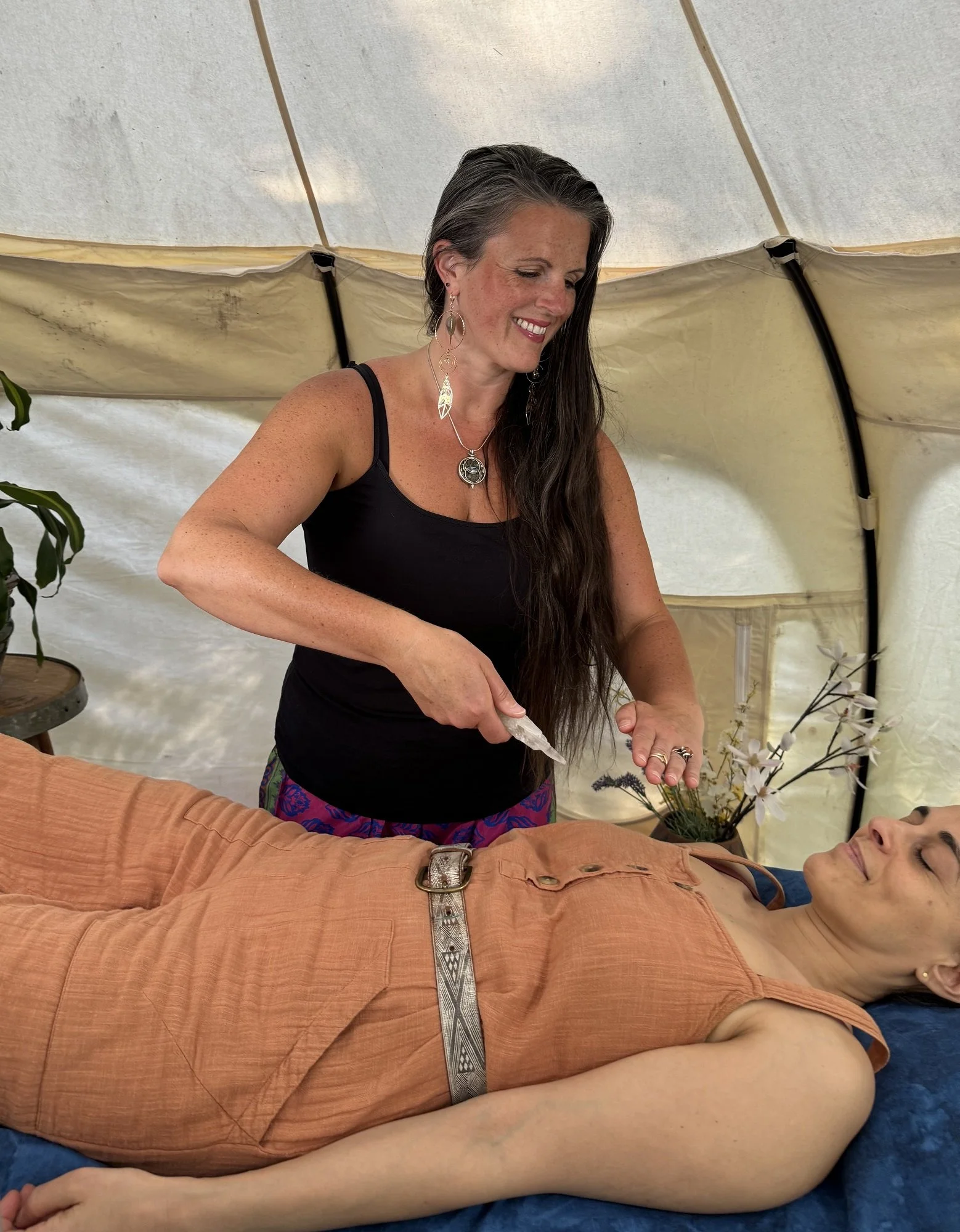
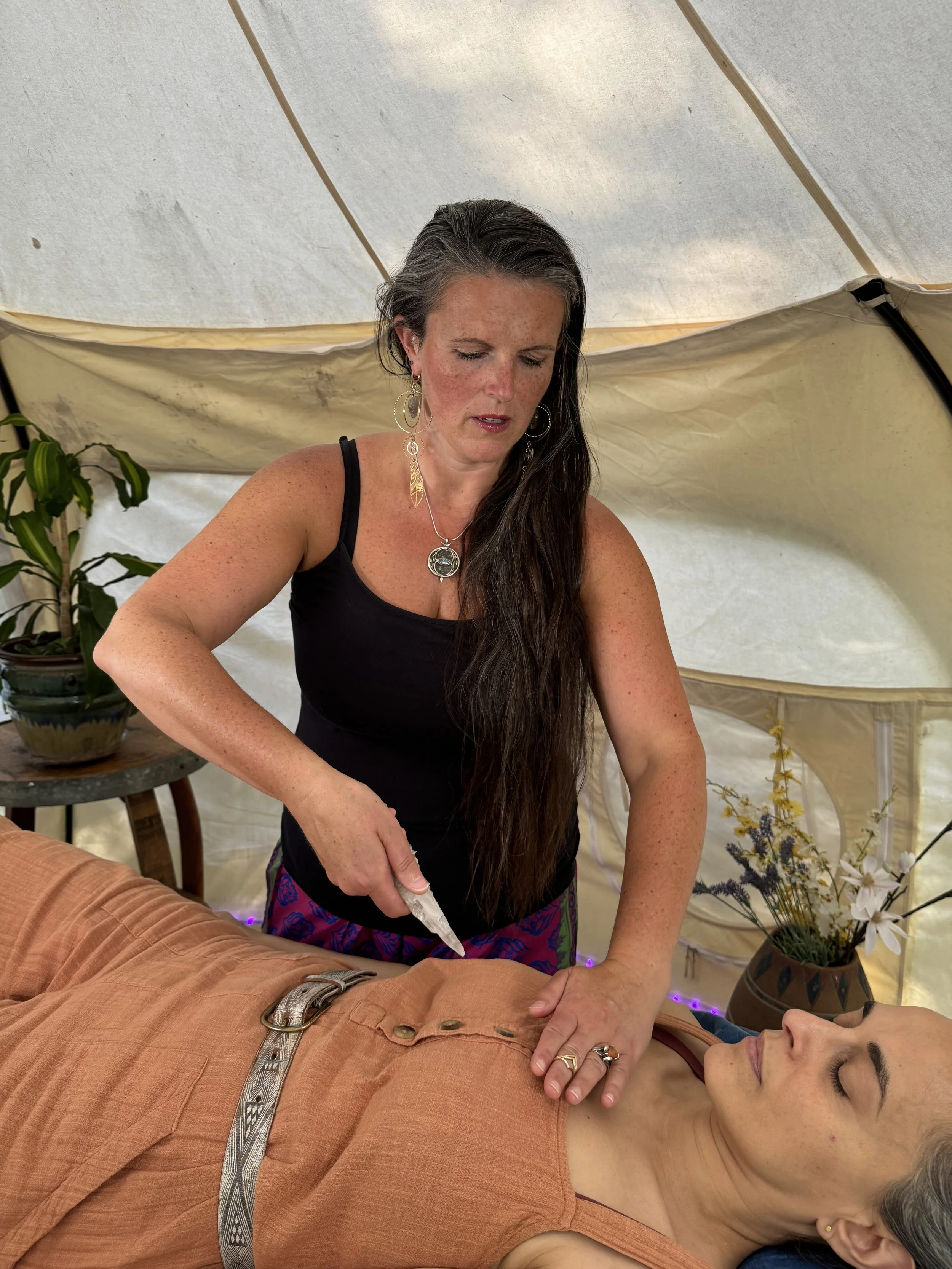
Energetic Mastery for Shamanic Healing with Michelle Hawk

Energetic mastery gives you:

Safety. The principles of energetic hygiene I teach are the energy equivalent of washing your hands after a hospital visit. You would never hug people, shake hands, travel on an airplane, and never wash your hands. That's just a bad idea. Your energy body deserves the same intelligent care.

Better health and efficacy. When you know how to clear, ground, and maintain your field, everything in your practice works better. Your sessions are cleaner. Your intuition is clearer. Your channel is more open.

Increased power and capacity. These practices support your life force, your vitality, and your ability to hold very powerful energy without it spinning you out. You can do deep, potent work without burning through your resources — so you can show up in service in a way that is resourced, regulated, and confident.

The Pyramid of the Foundations of Energetic Mastery

I teach this framework as a pyramid, because the base makes everything else possible. Here are the six layers:

1. Consciousness Practices (the base) — developing your energetic fluency: the ability to sense, feel, project, and direct energy in your body, your personal field, and the space around you. This is the foundation of all other layers.

2. Clearing — clearing your body, your energy field, and your space. Essential before, during, and after any energy work.

3. Grounding — arriving in full presence. Connecting to the Earth and to your body so you can work from a stable, rooted place.

4. Centering — gathering all of your energy back to you. Reclaiming what has scattered, leaked, or been given away.

5. Cultivation — actively increasing your energy, your capacity, and your life force. Building the vessel so it can hold more.

6. Protection (the top) — the final seal. And here's what often surprises people.

Why Protection Comes Last

Many people who come to me for support with energetic hygiene are primarily concerned with energetic protection. They want to know how to shield themselves, how to keep negative energies out, how to stay safe in the spirit world. And I understand the concern — it feels urgent.

But protection is the last layer of the pyramid, not the first. And here's why.

Most of what we perceive as protection issues are actually cleared up by doing the other work first. If you were to learn protection techniques without doing the clearing, grounding, centering, and cultivation work first, you would still remain vulnerable in other ways. A shield over an uncleared field is like putting a clean coat over dirty clothes. You still need to do the laundry.

By the time you've done the foundational work — by the time your field is clear, you're grounded and centered, and you've cultivated your capacity — protection becomes almost a natural consequence. The cherry on top. It seals and completes what is already solid, rather than trying to compensate for what is missing.

I see this particularly in students and clients who have an activated channel or mediumship practice. While they may be very psychically open, they lack the foundational energetic architecture to remain stable and safe in their channeling experience. This often leads to overwhelm, unwelcome attention from spiritual forces, and even psychic attacks and entity attachments. These people come to me claiming that their shields don’t work, asking for better protection practices. Every single time, when I redirect them away from protection and towards the other foundations of energetic mastery, they notice a huge difference and feel much safer and more stable in their channeling experience.

The Two Modes: Daily Practice and Spot Treatment

Every practice in this framework has two versions.

Daily practice is your training — your energetic fitness maintenance. Like going to the gym or to yoga class, not because anything is acutely wrong, but because consistent practice builds strength, capacity, and fluency over time.

Spot treatment is for acute situations. You just got out of a really draining meeting. You worked with a difficult client. You went somewhere energetically heavy and you can feel it in your field. Spot treatment is how you reset, clear, and return to yourself in real time.

Knowing both versions of each practice — and knowing when to use which one — is itself an important skill.

Energetic Mastery Is a Learnable Skill

There's a misconception in the world of energy work that some people can just do this naturally and others can't. I really don't believe that's true, and it's not what I've observed in years of teaching.

Yes, some people grew up in environments that were conducive to energetic sensitivity, and they may have a head start. But that doesn't mean someone who grew up in a more shut-down or discouraged environment can't develop these skills and become genuinely confident in them through practice.

Just like Michael Phelps has a physiology that naturally inclines him toward excellence in swimming — and he is exceptional — someone without that physiology can also excel through dedicated training. The body learns. The energy body learns too.

These are skills. These are muscles. They develop with use.

Ready to Build Your Foundation?

The Foundations of Energetic Mastery is woven throughout the entire Foundations of Shamanism course — it's not a single module, it's a thread that runs through all eleven weeks of the program because it underlies everything else we do.

If you're already on a Shamanic path and want personalized support building these foundations, 1:1 Shamanic Mentorship may be the right next step.

Not ready to dive in yet? Start with the free guide, Activate Your Shamanic Gifts — a beautiful first step into conscious, grounded Shamanic practice.